 By
By Seborrheic keratoses are common, noncancerous skin growths that often appear as people get older. They can develop on the chest, back, shoulders, neck, face, or other areas of the body. Their rough, waxy, or “stuck-on” appearance can sometimes make them tempting to scratch, peel, or pick.
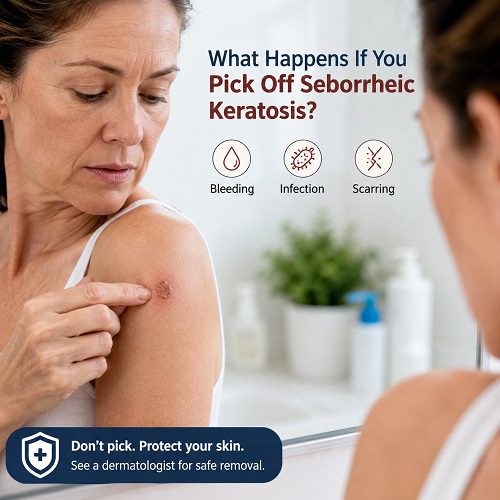
But what happens if you pick off seborrheic keratosis? Although removing a small portion may seem harmless, picking or tearing at a seborrheic keratosis can cause bleeding, irritation, infection, scarring, and changes in the appearance of the lesion. More importantly, trying to remove a growth yourself can make it harder to determine whether it really is a seborrheic keratosis.
What is a Seborrheic Keratosis?
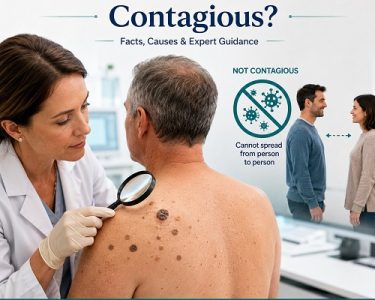
What Is a Seborrheic Keratosis? A seborrheic keratosis is a benign growth of skin cells. It is not contagious and is not generally considered Seborrheic Keratosis dangerous. These growths can vary considerably in appearance.
Some seborrheic keratoses are light tan or brown, while others may be very dark. Their surface can be smooth, rough, scaly, or waxy. Some are flat or slightly raised, while others become thicker and appear to sit on top of the skin.
Seborrheic keratoses commonly develop with age, although younger adults can also develop them. Genetics may play a role, and some people develop multiple lesions over time.
Because seborrheic keratoses can sometimes resemble other skin lesions, including certain types of skin cancer, it is important not to assume that every rough or dark growth is harmless.
What Happens If You Pick Off Seborrheic Keratosis?
If you pick off seborrheic keratosis, you may remove only part of the growth rather than the entire lesion. Because seborrheic keratoses are attached to the skin, pulling, scratching, or scraping them can damage the surrounding tissue.
Several things may happen.
1. The Skin May Bleed
One of the most immediate effects of picking a seborrheic keratosis is bleeding.
Even though the growth itself is benign, it contains blood vessels and is connected to living skin tissue. Scratching or tearing it can cause minor bleeding.
If bleeding occurs, gently apply pressure with clean gauze or a clean cloth until it stops. Avoid repeatedly touching or picking the area afterward.
Persistent or heavy bleeding should be evaluated by a healthcare professional.
2. You May Cause a Skin Wound
When you try to pull a seborrheic keratosis away from the skin, you can create an open wound.
The injury may be small, but breaking the skin creates an opportunity for bacteria to enter. The area may become sore, red, swollen, or irritated.
Keeping the damaged area clean and protected can help reduce the risk of complications.
3. Infection Can Develop
Picking at skin lesions with unwashed hands or contaminated tools increases the risk of infection.
Signs of a possible skin infection can include increasing redness, warmth, swelling, tenderness, pus, or worsening pain. Fever or feeling generally unwell can also be concerning, particularly if the infection is spreading.
If these symptoms develop, seek medical advice.
4. The Area May Become Irritated
Picking can Seborrheic Keratosis causes inflammation around the growth. The skin may become red, tender, itchy, or swollen.
Repeated irritation can keep the area inflamed Seborrheic Keratosis and may make the lesion more noticeable than it was before.
Scratching can also create a cycle in which irritation causes itching, and itching leads to more scratching.
5. Scarring or Pigment Changes May Occur
Damaging the skin can sometimes lead to a scar or temporary changes in skin color.
The risk depends on how deeply the skin was injured, how the wound heals, and individual factors affecting skin repair. Some people may develop a darker or lighter area after inflammation or injury.
For this reason, attempting to remove a seborrheic keratosis by picking is generally not a good substitute for professional removal.
Can a Seborrheic Keratosis Grow Back After Picking?
Yes. If you pick off only part of a seborrheic keratosis, remaining tissue can continue to be present.
It may look as though the growth has disappeared temporarily because its surface has been damaged or removed. However, picking is not a controlled medical removal technique and does not reliably remove the entire lesion.
If the lesion continues to bother you, a dermatologist or other qualified healthcare professional can assess it and discuss appropriate removal options.
Is It Safe to Remove Seborrheic Keratosis at Home?
Generally, you should avoid trying to remove a seborrheic keratosis by picking, cutting, scraping, burning, or using unverified home-removal products.
Professional removal methods can be selected according to the lesion’s size, location, appearance, and diagnosis. Depending on the situation, a healthcare professional may use techniques such as cryotherapy, curettage, or other appropriate procedures.
The most important first step is confirming that the growth is actually a seborrheic keratosis.
Why You Should Not Pick at a Skin Growth
The biggest concern is not simply the possibility of bleeding or infection. The bigger issue is that some skin cancers and other skin conditions can resemble seborrheic keratoses.
If you pick, scrape, or partially remove a suspicious lesion, you may alter its appearance. This can make it more difficult for a healthcare professional to assess what was originally present.
A changing, unusual, bleeding, or rapidly growing skin lesion should be examined rather than repeatedly manipulated.
What Should You Do If You Accidentally Pick Off Seborrheic Keratosis?
Accidentally scratching or catching a seborrheic keratosis does not necessarily mean something serious has happened.
If the area has been damaged, take simple steps to protect the skin.
Clean the Area Gently
Wash your hands before touching the wound. Gently clean the area with mild soap and clean water.
Avoid harsh chemicals, excessive rubbing, or repeatedly cleaning the wound.
Control Minor Bleeding
If the area is bleeding, use gentle, continuous pressure with clean gauze or a clean cloth.
Avoid lifting the cloth repeatedly to check whether the bleeding has stopped, because this can disturb the developing clot.
Protect the Wound
Once bleeding has stopped, keep the area protected from friction and further scratching.
A clean dressing may be useful if the area is likely to rub against clothing or be touched accidentally.
Avoid Picking Again
This is particularly important. Once a lesion has been damaged, continuing to pick can enlarge the wound and increase irritation and infection risk.
Allow the skin to heal rather than trying to remove the remaining portion yourself.
Monitor the Area
Pay attention to changes during healing. Increasing redness, swelling, warmth, drainage, worsening pain, or other concerning symptoms may indicate infection or another problem requiring medical attention.
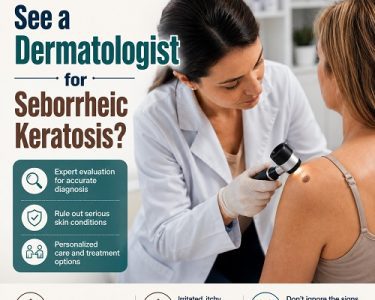
When Should You See a Dermatologist?
Not every seborrheic keratosis requires treatment. Many can simply be left alone if they are not causing symptoms.
However, professional evaluation is appropriate if you are uncertain about the diagnosis or if the lesion changes.
Consider having a skin growth examined if it:
- Changes rapidly in size, shape, or color
- Develops unusual or irregular pigmentation
- Bleeds without being injured
- Becomes persistently painful
- Develops a persistent sore or ulcerated area
- Looks significantly different from your other skin growths
- Becomes repeatedly irritated by clothing or jewelry
- Is difficult to identify as a typical seborrheic keratosis
A dermatologist can examine the lesion and determine whether it is consistent with seborrheic keratosis or whether further evaluation is needed.
Can Seborrheic Keratosis Be Cancerous?
Typical seborrheic keratoses are benign and are not skin cancer.
However, some skin cancers can resemble benign lesions. This is why diagnosis matters, particularly when a growth is new, changing, unusual, or symptomatic.
If you are unsure whether a lesion is a seborrheic keratosis, avoid trying to remove it yourself. A healthcare professional can evaluate it properly.
Why Do People Pick Seborrheic Keratoses?
There are several reasons people may pick at these growths.
Some have a rough texture that catches on clothing or jewelry. Others may itch or become irritated. A person may also pick because the lesion appears loose or because they believe it can simply be peeled away.
Cosmetic concerns are another common reason.
However, even if a seborrheic keratosis appears as though it could be easily removed, it is still connected to the skin. Pulling it away can injure healthy tissue underneath or around it.
Professional Seborrheic Keratosis Removal
If a seborrheic keratosis is bothersome, a healthcare professional can discuss removal.
Treatment depends on the individual lesion. Common professional approaches may include freezing the growth, scraping it from the skin, or using other dermatologic techniques.
The goal is controlled Seborrheic Keratosis removal while minimizing unnecessary damage to surrounding skin.
Professional treatment is especially valuable when the diagnosis is uncertain because the healthcare professional can determine whether the lesion needs further examination.
Natural Remedies for Seborrheic Keratosis
Natural Remedies for Seborrheic Keratosis are often searched by people who want gentle ways to care for these common, benign skin growths. Seborrheic keratoses may appear rough, waxy, raised, or slightly irritated, especially when they rub against clothing. Although natural approaches may support general skin health, there is limited evidence that home remedies can safely remove seborrheic keratosis.
For Seborrheic Keratosis Home Care, keep the affected area clean and moisturized, avoid scratching or picking the growth, and protect irritated skin from friction. Gentle skincare can help reduce discomfort and prevent unnecessary irritation. It is also important to avoid harsh acids, cutting, burning, or other DIY removal methods, as these can cause bleeding, infection, or scarring.
When considering Seborrheic Keratosis Treatment Options, professional evaluation is recommended, particularly if a growth changes in size, color, shape, or begins bleeding. A dermatologist can confirm the diagnosis and discuss appropriate removal methods if treatment is desired.
While healthy nutrition, adequate hydration, and gentle skincare can contribute to overall skin wellness, they should not be considered a proven cure for seborrheic keratosis. Always consult a qualified healthcare professional before using an unfamiliar remedy on a skin growth.
How to Prevent Irritation
If you have seborrheic keratoses that frequently become irritated, consider practical measures to protect them.
Wear clothing that does not repeatedly rub against the lesion. Avoid scratching itchy areas, and keep fingernails trimmed to reduce accidental skin damage.
If a growth repeatedly catches on clothing, jewelry, or other objects, ask a dermatologist whether removal would be appropriate.
Frequently Asked Questions
Can I peel off a seborrheic keratosis?
You should not intentionally peel or pick off a seborrheic keratosis. Doing so can cause bleeding, an open wound, irritation, infection, or scarring.
What happens if I accidentally scratch a seborrheic keratosis?
You may cause minor bleeding, irritation, or tenderness. Gently clean the area, control bleeding with pressure, protect the wound, and avoid further picking.
Will picking remove seborrheic keratosis permanently?
Not necessarily. Picking is uncontrolled and may leave part of the lesion behind. The remaining tissue may continue to be visible.
Can picking a seborrheic keratosis cause cancer?
Picking does not turn a typical seborrheic keratosis into skin cancer. However, manipulating a lesion can make it harder to assess its original appearance. A suspicious or changing lesion should be professionally evaluated.
Should I use a home remedy to remove it?
It is best to avoid unproven methods that burn, cut, freeze, or chemically damage the skin. Professional assessment is safer, particularly if you are not certain that the growth is a seborrheic keratosis.
Does a seborrheic keratosis need to be removed?
Not usually. Seborrheic keratoses are generally benign and may not require treatment. Removal may be considered if one is irritated, repeatedly injured, symptomatic, or cosmetically bothersome.
Final Thoughts
If you pick off seborrheic keratosis, you can cause bleeding, skin irritation, an open wound, infection, scarring, or pigment changes. Picking also does not provide a reliable way to completely remove the growth.
If you accidentally damage one, gently clean the area, control any minor bleeding, protect the wound, and avoid picking it again. If the lesion is changing, repeatedly bleeding, painful, unusual-looking, or uncertain in diagnosis, arrange an examination with a dermatologist.
The safest approach is to leave suspected seborrheic keratoses alone unless they have been professionally assessed and you have a reason to remove them. When removal is appropriate, a healthcare professional can choose a controlled method that is suitable for the lesion and your skin.
Medical disclaimer: This article is for general educational purposes and does not replace professional medical diagnosis or treatment. If you have a new, changing, bleeding, painful, or unusual skin growth, seek evaluation from a qualified healthcare professional.