 By
By Seborrheic keratosis is one of the most common non-cancerous skin growths found in adults, especially after the age of 40. These growths often appear as brown, black, or tan spots with a waxy or rough surface. While they are harmless and do not develop into skin cancer, many people seek seborrheic keratosis treatment because the lesions become irritated, itchy, catch on clothing, or affect their appearance.
Fortunately, several effective treatment options are available. From freezing the growth with liquid nitrogen to removing it with laser technology, dermatologists can safely eliminate seborrheic keratoses with minimal discomfort and recovery time.
What Is Seborrheic Keratosis?
Seborrheic keratosis is a benign skin growth that develops from the outer layer of the skin. These lesions often have a “stuck-on” appearance and can vary in color from light tan to dark brown or black.
Common locations include:
- Face
- Chest
- Back
- Neck
- Shoulders
- Arms
- Scalp
They may occur as a single growth or in large numbers and usually increase with age.
When Is Seborrheic Keratosis Treatment Necessary?
Since seborrheic keratoses are harmless, treatment is not always medically required.
However, removal may be recommended if the growth:
- Becomes irritated by clothing or jewelry
- Frequently bleeds
- Causes itching or discomfort
- Changes rapidly in appearance
- Is difficult to distinguish from skin cancer
- Creates cosmetic concerns
A dermatologist should evaluate any suspicious skin lesion before treatment.
Diagnosing Seborrheic Keratosis
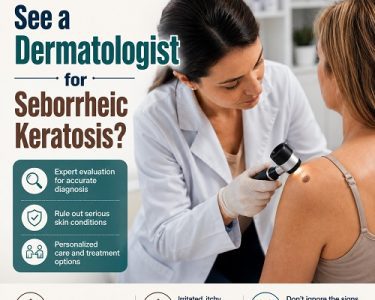
Before recommending seborrheic keratosis treatment, a healthcare provider usually performs:
Physical Examination
Most seborrheic keratoses have distinctive features that allow diagnosis by simple visual inspection.
Dermoscopy
A handheld magnifying device helps identify characteristic patterns while ruling out melanoma or other skin cancers.
Skin Biopsy
If the growth has unusual colors, irregular borders, or rapid changes, a biopsy may be performed to confirm the diagnosis.
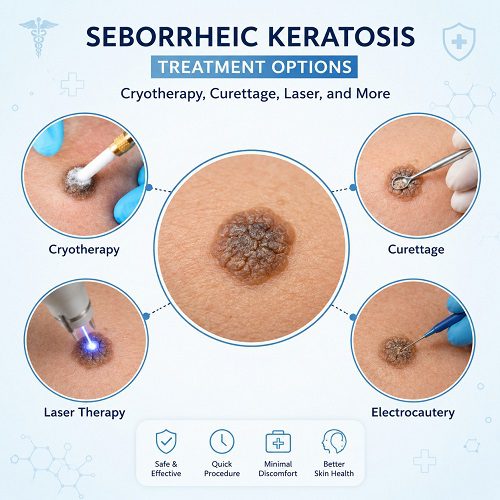
Cryotherapy (Freezing)
Cryotherapy is one of the most common and effective seborrheic keratosis treatment options.
How It Works
Liquid nitrogen is applied directly to the lesion, freezing the abnormal skin cells.
The frozen tissue gradually dies and falls off within several days or weeks.
Best For
- Small lesions
- Medium-sized growths
- Light-colored seborrheic keratoses
Procedure Time
Usually takes only 5–10 minutes in a doctor’s office.
Recovery
Patients may experience:
- Mild redness
- Blister formation
- Temporary swelling
- Crusting
Healing generally occurs within 1 to 3 weeks.
Advantages
- Fast procedure
- Minimal preparation
- Highly effective
- No stitches required
Possible Side Effects
- Temporary skin discoloration
- Blistering
- Mild pain
- Rare scarring
Curettage
Curettage is another widely used seborrheic keratosis treatment.
What Is Curettage?
A dermatologist numbs the area with local anesthesia and gently scrapes off the growth using a small surgical instrument called a curette.
Sometimes electrocautery is performed afterward to stop bleeding and destroy remaining cells.
Best For
- Raised lesions
- Thick seborrheic keratoses
- Facial growths
Benefits
- Immediate removal
- Excellent cosmetic results
- Short healing period
Recovery
The treated area forms a small scab that typically heals within one to two weeks.
Electrocautery (Electrosurgery)
Electrocautery uses electrical current to burn away the growth.
It is often combined with curettage for improved results.
Advantages
- Removes thick lesions
- Controls bleeding
- Precise treatment
- Low recurrence rate
Recovery
Patients may notice:
- Mild redness
- Small scab
- Temporary tenderness
Complete healing usually occurs within two weeks.
Laser Treatment
Laser therapy has become an increasingly popular seborrheic keratosis treatment, especially for cosmetic concerns.
Types of Lasers
Dermatologists may use:
- CO₂ laser
- Erbium:YAG laser
- Fractional laser
The laser vaporizes the lesion while minimizing damage to surrounding skin.
Best Candidates
- Facial lesions
- Multiple growths
- Patients seeking minimal scarring
Benefits
- Excellent cosmetic outcome
- Precise removal
- Minimal bleeding
- Quick recovery
Possible Risks
- Temporary redness
- Pigment changes
- Mild swelling
Shave Excision
Shave excision involves carefully shaving the lesion off the skin using a sterile surgical blade.
Unlike deeper surgical procedures, stitches are usually unnecessary.
Benefits
- Immediate removal
- Tissue can be sent for biopsy
- Minimal recovery time
This technique is often chosen when the diagnosis is uncertain.
Chemical Peels
Some dermatologists use chemical solutions that gradually remove superficial skin lesions.
Although less common, chemical peels may improve the appearance of multiple flat seborrheic keratoses.
They are generally more suitable for cosmetic skin rejuvenation than thick lesions.
Hydrogen Peroxide Prescription Solution
A prescription-strength hydrogen peroxide solution has been approved in some countries for treating raised seborrheic keratoses.
The solution is applied directly by a healthcare professional.
Over time, the treated lesion gradually disappears.
This option works best for:
- Small lesions
- Raised growths
- Cosmetic treatment
Can Seborrheic Keratosis Be Treated Naturally?
Many people search for Natural Remedies for Seborrheic Keratosis before considering medical procedures.
Popular home remedies include:
- Aloe vera
- Coconut oil
- Tea tree oil
- Apple cider vinegar
- Vitamin E oil
However, there is limited scientific evidence proving these remedies remove seborrheic keratoses.
Some acidic or irritating substances may actually damage healthy skin.
Anyone considering natural remedies should discuss them with a dermatologist first.
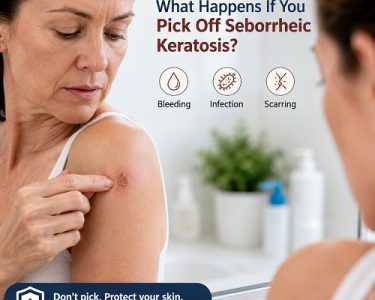
Should You Remove Seborrheic Keratosis Yourself?
No.
Trying to cut, scrape, burn, or peel off a seborrheic keratosis at home can lead to:
- Infection
- Bleeding
- Scarring
- Delayed diagnosis of skin cancer
Professional evaluation is always the safest option.
Recovery After Seborrheic Keratosis Treatment
Recovery depends on the treatment method.
Most patients experience:
- Mild redness
- Temporary swelling
- Small scab formation
- Slight tenderness
General aftercare includes:
- Keep the area clean.
- Avoid scratching.
- Apply prescribed ointments.
- Protect healing skin from sunlight.
- Follow your dermatologist’s instructions.
Healing generally occurs within one to three weeks.
Can Seborrheic Keratosis Come Back?
The treated lesion usually does not return after complete removal.
However, people who develop seborrheic keratoses often continue forming new lesions elsewhere as they age.
Regular skin examinations can help monitor new growths.
Possible Risks of Treatment
Although complications are uncommon, every medical procedure carries some risk.
Possible side effects include:
- Temporary pain
- Redness
- Swelling
- Blistering
- Infection
- Pigment changes
- Mild scarring
Choosing an experienced dermatologist helps minimize these risks.
Cost of Seborrheic Keratosis Treatment
Treatment costs vary depending on:
- Number of lesions
- Treatment method
- Geographic location
- Insurance coverage
Cosmetic removal is often not covered by insurance unless the lesion Seborrheic Keratosis causes symptoms such as bleeding or irritation.
Preventing Future Seborrheic Keratoses
There is no guaranteed way to prevent seborrheic keratoses because genetics and aging play major roles.
However, healthy skin habits may support overall skin health.
Recommendations include:
- Wear sunscreen daily.
- Avoid excessive sun exposure.
- Perform regular skin self-examinations.
- Visit a dermatologist for new or changing growths.
- Maintain a healthy lifestyle with balanced nutrition.
When Should You See a Doctor?
Seek medical evaluation if a skin growth:
- Changes rapidly
- Bleeds repeatedly
- Becomes painful
- Develops irregular borders
- Shows multiple colors
- Looks significantly different from your other lesions
These features may require further examination to rule out skin cancer.
Frequently Asked Questions
What is the best seborrheic keratosis treatment?
The best treatment depends on the lesion’s size, location, thickness, and your cosmetic goals. Cryotherapy, curettage, electrocautery, and laser therapy are among the most commonly recommended options.
Is seborrheic keratosis removal painful?
Most treatments involve little discomfort. Local anesthesia may be used for procedures such as curettage or shave excision, while cryotherapy typically causes a brief stinging or burning sensation.
Does laser treatment leave scars?
Laser therapy generally has a low risk of scarring when performed by an experienced dermatologist. Temporary redness or changes in skin color may occur during healing.
Can seborrheic keratosis fall off on its own?
Some lesions may partially crumble or detach due to friction, but most remain unless professionally removed.
Is treatment permanent?
The treated lesion is usually permanently removed, but new seborrheic keratoses can develop in other areas over time.
Conclusion
Choosing the right seborrheic keratosis treatment depends on your symptoms, the size and location of the growth, and your personal preferences. Cryotherapy remains one of the most popular options because it is quick, effective, and minimally invasive. Curettage, electrocautery, laser therapy, shave excision, and prescription topical treatments also provide excellent results for selected patients.
Although seborrheic keratoses are harmless, any new or changing skin growth should be evaluated by a dermatologist before treatment. Professional diagnosis ensures that more serious conditions, including skin cancer, are not overlooked. With the appropriate care, most people achieve successful removal and enjoy healthy, comfortable skin with minimal downtime.