 By
By Actinic keratosis is a common skin condition that develops after years of exposure to ultraviolet (UV) radiation. It often appears as a rough, scaly or dry patch on areas of skin that receive regular sunlight, such as the face, Actinic Keratosis on the Ears, Actinic Keratosis on the Scalp, neck, forearms and backs of the Actinic Keratosis on the Hands. Because cumulative sun exposure increases with age, actinic keratosis in older adults is particularly common.
Although an actinic keratosis is not the same as skin cancer, some lesions can develop into squamous cell carcinoma, a type of skin cancer. For this reason, new, changing or persistent rough patches should be assessed by a healthcare professional, especially in older adults.
Treatment can remove visible lesions, reduce abnormal skin cells and help protect the skin from further UV damage. The most appropriate approach depends on the number of lesions, their location, skin type, overall health and previous treatment history.
What Is Actinic Keratosis?
What Is Actinic Keratosis? Actinic keratosis (AK), also called solar keratosis, is a precancerous skin lesion caused primarily by long-term exposure to ultraviolet radiation. UV radiation can damage the DNA within skin cells. Over many years, repeated exposure can cause abnormal cells to develop in the outer layer of the skin.
An AK may initially feel rough before it becomes easy to see. Some lesions look like small areas of dry or flaky skin, while others become thicker and more noticeable.
Common features include:
- Rough or sandpaper-like skin
- Red, pink, brown or skin-coloured patches
- Scaling or flaking
- Mild itching, burning or tenderness
- A small crusted area
- Persistent rough spots that do not disappear
Actinic keratoses can occur as single lesions or as multiple patches across sun-exposed skin.
Why Is Actinic Keratosis Common in Older Adults?
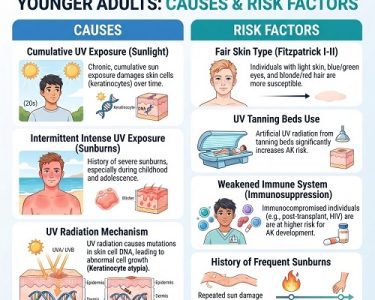
The main reason actinic keratosis in older adults is common is cumulative UV exposure. The skin records the effects of sunlight over many years. A person may not notice significant damage when younger, but repeated exposure can eventually produce visible changes.
Several factors contribute to the development of AK.
Long-Term Sun Exposure
Repeated exposure to sunlight is the primary risk factor. People who have spent many years working or spending leisure time outdoors may have greater cumulative UV exposure.
Outdoor occupations can increase exposure, particularly when sunscreen, protective clothing or shade has not been used consistently.
Previous Sunburn
Repeated sunburn can cause substantial UV-related skin damage. A history of frequent sunburns may increase the risk of developing actinic keratoses later in life.
Aging Skin
Aging skin gradually becomes thinner and loses some of its natural protective characteristics. Years of accumulated UV exposure can also affect collagen, pigmentation and the DNA of skin cells.
Age itself does not causes Actinic Keratosis, but the longer a person has been exposed to UV radiation, the greater the opportunity for cumulative damage to occur.
Fair Skin
People with fair skin, particularly those who burn easily and tan poorly, generally have a higher risk of actinic keratosis. Light-coloured eyes and hair can also be associated with increased susceptibility to UV-related skin damage.
However, people with darker skin can develop actinic keratoses too, so changes in sun-exposed skin should not be ignored.
Weakened Immune System
People with weakened immune systems may have a higher risk of developing actinic keratoses and progressing to certain types of skin cancer. This can include people taking medicines that suppress immune function or those with certain medical conditions.
Where Does Actinic Keratosis Usually Develop?
AK usually develops on areas that receive frequent or prolonged sunlight.
Common locations include:
- Face
- Forehead
- Ears
- Scalp, particularly when hair is thinning
- Neck
- Forearms
- Backs of the hands
- Shoulders
- Lower legs in some people
For older adults with thinning hair or bald areas, the scalp can receive considerable UV exposure over many years. A rough or scaly scalp lesion should therefore be examined rather than automatically being assumed to be dry skin.
What Does Actinic Keratosis Look and Feel Like?
An actinic keratosis can be difficult to recognise during its early stages. Sometimes the rough texture is easier to feel than to see.
The lesion may feel like:
- Fine sandpaper
- A dry patch
- A rough spot that repeatedly flakes
- A crusted area
- A slightly raised patch
Colour can vary. AK may appear pink, red, brown, grey or similar to the surrounding skin.
Some lesions are painless, while others may itch, sting, burn or become tender.
A lesion that becomes thicker, painful, ulcerated, rapidly enlarges or bleeds should receive prompt medical assessment.
Actinic Keratosis in Elderly People: Why Diagnosis Matters
Actinic Keratosis in elderly patients deserves attention because an AK can occasionally progress to squamous cell carcinoma. Not every AK becomes cancerous, and many remain stable or disappear, but it is not possible to determine the future behaviour of every lesion simply by looking at it at home.
A dermatologist or other qualified healthcare professional can examine suspicious areas and determine whether treatment or further investigation is appropriate.
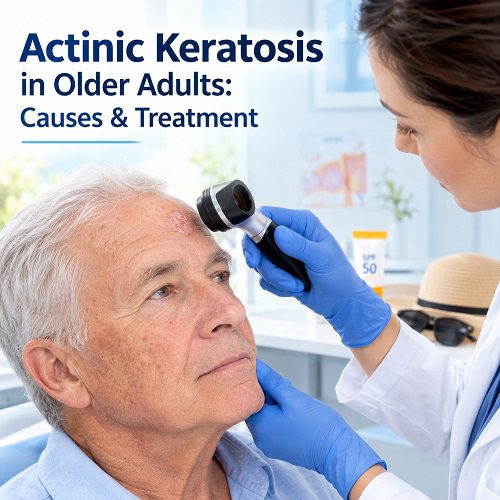
Diagnosis often involves a visual and physical examination of the skin. If a lesion has unusual characteristics or there is concern about skin cancer, a skin biopsy may be recommended.
How Is Actinic Keratosis Diagnosed?
A healthcare professional usually examines the affected area and checks the surrounding skin for additional lesions.
During an assessment, the clinician may consider:
- The appearance of the lesion
- Texture and thickness
- Location
- Duration
- Changes over time
- Symptoms such as tenderness or bleeding
- Previous history of skin cancer or Actinic Keratosis
- Amount of lifetime sun exposure
A biopsy may be performed when the diagnosis is uncertain or when a lesion has features that require further investigation.
Actinic Keratosis and Skin Cancer: What Is the Difference?
Actinic keratosis is considered a precancerous change rather than skin cancer itself. Some lesions can progress to squamous cell carcinoma.
Signs that warrant medical assessment include:
- Increasing thickness
- Persistent or increasing pain
- Recurrent bleeding
- A persistent crust
- Rapid growth
- Ulceration
- A sore that does not heal
- Significant changes in appearance
These features do not automatically mean that a lesion is cancerous. However, they should not be ignored.
Treatment for Actinic Keratosis in Older Adults
Actinic Keratosis Treatment depends on the individual lesion and the extent of sun damage. A healthcare professional may recommend treating one lesion, several lesions or a wider area of sun-damaged skin.
Common treatments include cryotherapy, prescription creams, photodynamic therapy and other procedures.
Cryotherapy
Cryotherapy uses extremely cold temperatures, commonly liquid nitrogen, to destroy abnormal skin cells.
It is often used for individual or limited numbers of AK lesions.
After treatment, the area may become:
- Red
- Swollen
- Crusted
- Blistered
The treated area generally heals over time. Older adults may need specific aftercare instructions depending on skin condition, circulation and other health factors.
Prescription Creams
Several prescription topical treatments can be used for AK. These treatments work differently but are intended to destroy or treat abnormal cells within the affected skin.
Depending on the medication, treatment can cause redness, scaling, irritation and inflammation. The treatment schedule varies, so it is important to follow the prescribing clinician’s instructions.
Topical treatment may be particularly useful when multiple AKs occur across a broader area of sun-damaged skin.
Photodynamic Therapy
Photodynamic therapy (PDT) uses a photosensitising medicine followed by exposure to a specific type of light. The treatment targets abnormal cells.
PDT may be considered when there are multiple lesions or areas of sun-damaged skin.
The treated area can become red and sensitive afterward. A clinician will provide instructions about light exposure and skin care during recovery.
Curettage and Other Procedures
For thicker or more suspicious lesions, a clinician may use a procedure such as curettage, sometimes combined with another treatment.
The choice depends on the appearance and thickness of the lesion and whether there is concern about an alternative diagnosis or skin cancer.
Is Treatment Always Necessary?
A healthcare professional can determine whether an AK should be treated, monitored or investigated further.
Factors influencing treatment decisions can include:
- Number of lesions
- Thickness of the lesion
- Location
- Symptoms
- Previous AKs
- Immune status
- History of skin cancer
- Patient preferences
- Response to previous treatment
Older adults should not assume that a rough patch is simply a normal part of aging. Persistent changes deserve professional assessment.
Protecting Aging Skin From Further Sun Damage
Preventing additional UV damage is an important part of managing actinic keratosis in older adults.
Practical measures include:
Use Broad-Spectrum Sunscreen
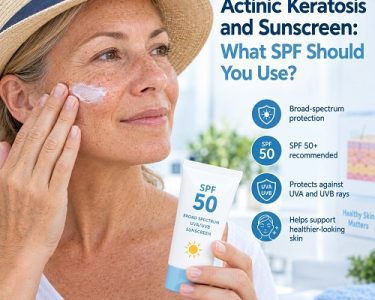
Use a broad-spectrum sunscreen with an appropriate SPF and apply it to exposed skin. Reapply as directed, particularly after sweating or swimming.
Wear Protective Clothing
Long sleeves, trousers, wide-brimmed hats and UV-protective clothing can reduce direct sun exposure.
Seek Shade
Try to stay in shaded areas when UV exposure is strong. A hat or umbrella can provide additional protection, although shade does not block all UV radiation.
Protect the Scalp and Ears
Older adults with thinning hair or bald areas should pay particular attention to the scalp and ears. A suitable hat can provide useful physical protection.
Avoid Intentional Tanning
Indoor tanning devices expose the skin to UV radiation and can contribute to cumulative skin damage.
Skin Checks for Older Adults
Regular skin awareness can help identify changes early. Older adults can periodically check areas that are difficult to see, including the scalp, back of the ears and back of the Actinic Keratosis on the Neck.
Ask a family member or caregiver for help when necessary, particularly if mobility or eyesight makes self-examination difficult.
Look for lesions that are:
- New
- Persistent
- Rough or scaly
- Changing in size or colour
- Bleeding
- Tender
- Becoming thicker
A dermatologist can perform a more comprehensive examination when appropriate.
Can Actinic Keratosis Come Back?
Yes. Treating an individual lesion does not remove all previous UV damage from the surrounding skin. New AKs can therefore develop in the same area or elsewhere.
This is why treatment and prevention work together. Managing existing lesions while reducing additional UV exposure can help reduce future skin damage.
People who have had multiple AKs may benefit from periodic professional skin examinations.
Can Diet or Supplements Treat Actinic Keratosis?
A balanced diet provides nutrients needed for normal skin function and overall health. However, dietary changes or supplements should not be considered a replacement for professional diagnosis or established treatment for actinic keratosis.
If you are considering supplements, discuss them with a healthcare professional, particularly if you take prescription medicines or have chronic health conditions.
The priority should remain appropriate skin assessment, treatment when indicated and protection from further UV exposure.
When Should an Older Adult See a Dermatologist?
Arrange a medical assessment for a skin lesion that is persistent, changing or difficult to identify.
Seek prompt assessment if an area:
- Becomes increasingly painful
- Bleeds repeatedly
- Grows quickly
- Becomes significantly thicker
- Develops an ulcer
- Does not heal
- Changes noticeably
A dermatologist can distinguish AK from other conditions that can look similar, including some forms of skin cancer and benign growths.
Living With Actinic Keratosis
Having one or more AKs does not mean that skin cancer will definitely develop. However, it indicates that the skin has experienced significant cumulative UV exposure.
For older adults, managing AK is therefore about more than treating a visible rough patch. It also involves protecting the skin from further UV exposure and staying alert to new or changing lesions.
With appropriate medical assessment and treatment, many AKs can be effectively managed. Regular skin checks and sun protection can also play an important role in long-term skin health.
Frequently Asked Questions
Is actinic keratosis common in older adults?
Yes. Actinic keratosis is particularly common in older adults because the condition is associated with cumulative exposure to ultraviolet radiation over many years.
Can actinic keratosis turn into skin cancer?
Some actinic keratoses can progress to squamous cell carcinoma. The risk varies, and most individual lesions do not necessarily become cancerous. A healthcare professional can assess lesions that appear suspicious or change over time.
Does actinic keratosis hurt?
Many lesions cause no symptoms, but some may itch, sting, burn or become tender. Pain or increasing tenderness should be assessed, particularly if the lesion is also becoming thicker or changing.
Can actinic keratosis disappear on its own?
Some AKs may become less noticeable or disappear, but others persist or return. Because AK can be associated with an increased risk of squamous cell carcinoma, persistent lesions should be discussed with a healthcare professional.
What is the best treatment for actinic keratosis in older adults?
There is no single treatment that is best for every person. Cryotherapy, prescription topical treatments, photodynamic therapy and other procedures may be considered depending on the number, thickness and location of lesions and the individual’s circumstances.
How can older adults prevent more actinic keratoses?
Consistent sun protection is important. Use broad-spectrum sunscreen, wear protective clothing and hats, seek shade and avoid intentional tanning. Regular skin examinations can also help identify new lesions early.
Conclusion
Actinic keratosis in older adults is strongly associated with cumulative UV exposure and long-term sun damage. As aging skin has experienced years of environmental exposure, rough, scaly or persistent patches deserve attention rather than being dismissed as ordinary signs of aging.
Treatment options include cryotherapy, prescription topical medicines, photodynamic therapy and other procedures. The appropriate choice depends on the individual and should be determined with a qualified healthcare professional.
Older adults can also protect their skin by limiting UV exposure, using broad-spectrum sunscreen, wearing protective clothing and monitoring for new or changing lesions. If a rough patch becomes painful, thicker, rapidly enlarges, bleeds or fails to heal, seek medical assessment promptly.
Medical Disclaimer
This article is provided for general educational purposes and is not a substitute for professional medical advice, diagnosis or treatment. Actinic keratosis can resemble other skin conditions, including skin cancer. If you have a new, persistent, changing, painful or bleeding skin lesion, consult a qualified healthcare professional or dermatologist for an appropriate evaluation. Do not start, stop or change a treatment based solely on information in this article.