 By
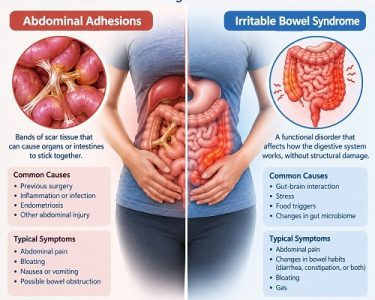
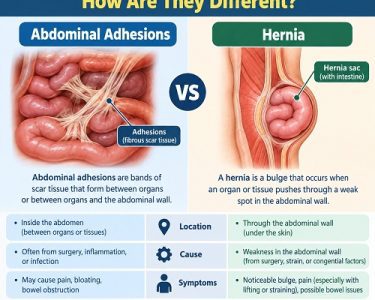
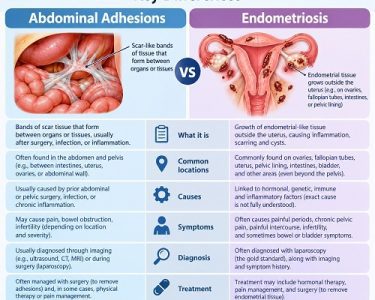
By Abdominal adhesions are bands of scar tissue that can develop inside the abdomen after surgery, infection, inflammation, or another form of tissue injury. They may connect organs or tissues that would normally move freely against one another.
Many people with abdominal adhesions have no symptoms. However, adhesions can sometimes cause chronic or recurring discomfort, particularly when they restrict the normal movement of tissues or contribute to bowel problems.
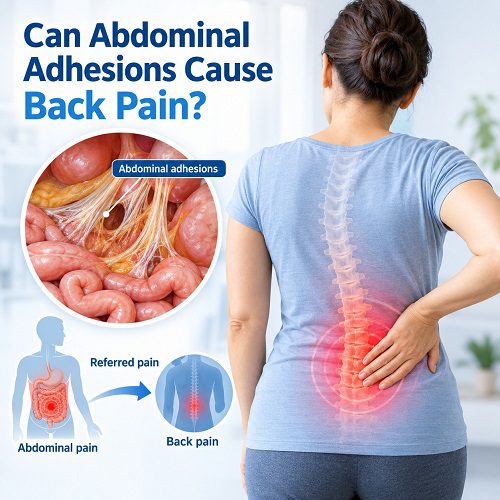
A common question is whether abdominal adhesions and back pain can be connected. The answer is that adhesions may contribute to back discomfort in some people, although back pain has many possible causes and an adhesion is not always responsible.
The connection can be difficult to recognise because pain originating in the abdomen or pelvis may sometimes be felt somewhere else. This is known as referred pain. Muscle tension, altered movement, bowel obstruction and irritation of nearby tissues may also contribute to discomfort that extends towards the back.
Understanding how adhesions develop, what symptoms they can cause and when back pain requires medical assessment can help you decide what to do next.
What Are Abdominal Adhesions?
What Are Abdominal Adhesions? Abdominal adhesions are internal areas of scar-like tissue that form between surfaces within the abdomen. They can cause tissues or organs to stick together.
Normally, abdominal organs have a certain amount of movement. A thin layer of tissue and fluid helps structures move smoothly. Following inflammation or tissue injury, the body’s healing process can produce fibrous tissue. Sometimes this tissue remains and forms an adhesion.
Adhesions can develop after:
- Abdominal or pelvic surgery
- Caesarean section
- Appendicitis
- Peritonitis
- Pelvic inflammatory conditions
- Endometriosis
- Abdominal infections
- Inflammation within the abdomen
An adhesion may involve the intestines, abdominal wall, uterus, ovaries, bladder or other structures.
Some adhesions are small and cause no problems. Others may be extensive enough to restrict movement or pull on surrounding tissues.
Can Abdominal Adhesions Cause Back Pain?
Abdominal adhesions and back pain can be associated in some circumstances, but adhesions are not considered a common direct cause of ordinary back pain.
When adhesions cause symptoms, discomfort is more commonly associated with the abdomen or pelvis. However, pain from these areas can sometimes be perceived in the back because of the way nerves transmit pain signals.
Adhesions can also alter how nearby tissues move. If scar tissue restricts normal movement, you may unconsciously change your posture or movement patterns to avoid discomfort. Over time, this may place additional strain on the muscles of the abdomen, pelvis, hips or lower back.
This means that back pain associated with adhesions may result from several possible mechanisms rather than the adhesion simply “causing” pain in the back.
How Can Abdominal Adhesions Contribute to Back Discomfort?
Several mechanisms may help explain why someone with abdominal adhesions experiences back pain.
1. Referred Pain
One possible explanation is referred pain.
Referred pain occurs when discomfort originating in one area is perceived somewhere else. Different organs and tissues can share nerve pathways, making it difficult for the brain to identify the exact source of a pain signal.
For example, discomfort originating in the abdomen or pelvis may sometimes be perceived in the lower back.
This does not mean that every episode of back pain in someone with abdominal adhesions comes from the adhesions. Referred pain is only one possible explanation.
2. Restriction of Normal Tissue Movement
Healthy abdominal tissues normally have some freedom of movement. Adhesions can reduce this mobility.
When an adhesion connects tissues that would normally move independently, certain movements may create tension through the affected area.
You may notice discomfort when:
- Stretching
- Bending
- Twisting
- Standing for a long time
- Changing position
- Exercising
- Moving after sitting for an extended period
The location and severity of symptoms depend on where the adhesions have formed and which tissues they involve.
3. Changes in Posture and Movement
Persistent abdominal pain can cause you to change the way you sit, stand or walk.
For instance, you may lean forward slightly or avoid twisting your torso because certain movements increase abdominal discomfort. These adaptations may place additional stress on the muscles and joints of the lower back.
Over time, muscle tension and altered movement patterns can contribute to back discomfort.
In this situation, the adhesion may be an indirect contributor rather than the direct source of the back pain.
4. Bowel-Related Problems
Adhesions can sometimes involve the intestines. In some cases, they can contribute to partial or complete bowel obstruction.
Bowel problems may produce:
- Cramping
- Abdominal swelling
- Constipation
- Difficulty passing gas
- Nausea
- Vomiting
- Abdominal discomfort
Severe abdominal or bowel symptoms can also be accompanied by discomfort elsewhere, including the back.
A suspected bowel obstruction requires prompt medical assessment.
5. Pelvic Adhesions
Adhesions affecting the pelvis may sometimes cause pelvic discomfort that spreads towards the lower back.
This can be particularly relevant when adhesions develop following pelvic surgery or inflammation.
However, pelvic pain and lower back pain also have many other possible causes, including urinary, reproductive, gastrointestinal and musculoskeletal conditions.
A healthcare professional may need to investigate several possibilities before determining the likely cause.
What Does Adhesion-Related Pain Feel Like?
There is no single pattern that proves pain is caused by adhesions.
Some people describe adhesion-related discomfort as:
- Pulling or tugging
- Cramping
- Aching
- Tightness
- Intermittent discomfort
- Pain that becomes worse with certain movements
- Abdominal discomfort that extends towards the pelvis or back
The Abdominal Adhesions symptoms may come and go rather than remaining constant.
Some people may experience discomfort during movement because scar tissue restricts normal tissue mobility. Others may have symptoms associated with bowel movement or digestion.
It is important to remember that these symptoms are not specific to adhesions. Similar symptoms can occur with muscle strain, spinal conditions, irritable bowel syndrome, kidney problems, pelvic conditions and other disorders.
Abdominal Adhesions vs Common Causes of Back Pain
Back pain is extremely common and often originates from the muscles, joints, discs or other structures of the spine.
Common Abdominal Adhesions causes include:
- Muscle strain
- Poor posture
- Prolonged sitting
- Disc problems
- Arthritis
- Sciatica
- Injuries
- Reduced physical activity
If your back pain began after abdominal surgery, you might naturally suspect adhesions. However, timing alone does not prove that scar tissue is responsible.
For example, reduced activity following surgery can weaken muscles and contribute to back pain. Changes in sleeping position, lifting technique or posture may also play a role.
That is why medical assessment is important when pain persists, repeatedly returns or interferes with daily activities.
Can Imaging Detect Abdominal Adhesions?
Diagnosing adhesions can be challenging.
Routine imaging tests such as ultrasound, CT scans and MRI scans may sometimes identify complications associated with adhesions, such as bowel obstruction. However, adhesions themselves can be difficult to see directly on standard imaging.
Doctors generally consider your:
- Medical history
- Previous operations
- Symptoms
- Physical examination
- Other possible causes of pain
- Imaging findings, when appropriate
A history of abdominal or pelvic surgery can increase suspicion because surgery is a common cause of adhesions.
In some situations, laparoscopy may be used to directly examine the abdomen. However, surgery itself can cause new adhesions, so doctors carefully consider the potential benefits and risks before using an operation solely to investigate or treat suspected adhesions.
When Should You See a Doctor?
You should arrange a medical assessment if you have persistent or unexplained abdominal or back pain, especially if you have previously undergone abdominal or pelvic surgery.
Seek medical attention promptly if you develop severe or worsening symptoms.
You should receive urgent assessment if abdominal or back pain occurs with symptoms such as:
- Severe abdominal swelling
- Persistent vomiting
- Inability to pass stool or gas
- Severe or rapidly worsening abdominal pain
- Fever
- Fainting or significant weakness
- Blood in the stool or vomit
These symptoms can indicate a potentially serious abdominal problem, including bowel obstruction or infection.
Do not assume that severe pain is simply an adhesion.
How Are Abdominal Adhesions Treated?
Abdominal Adhesions Treatment depends on whether adhesions are actually causing symptoms and whether complications have developed.
Observation
If adhesions are discovered but are not causing significant problems, treatment may not be necessary.
Many people have adhesions without experiencing symptoms.
Managing Symptoms
When symptoms are mild and no serious complication is present, your healthcare professional may focus on managing the symptoms and investigating other possible causes.
Treatment may involve addressing bowel problems, physical limitations or other conditions contributing to pain.
The appropriate approach depends on your individual symptoms and medical history.
Surgery
A procedure called adhesiolysis can be used to cut and separate adhesions.
However, surgery is not automatically recommended for every person with abdominal adhesions.
One important reason is that abdominal surgery can itself cause new adhesions. Surgery also carries risks such as bleeding, infection and accidental injury to surrounding organs.
Doctors therefore need to weigh the potential benefits against these risks.
Surgery may be considered when adhesions are strongly suspected of causing significant complications, particularly bowel obstruction, or when the potential benefits outweigh the risks.
Can Exercise Help With Back Pain After Abdominal Surgery?
Gentle physical activity may help maintain mobility and reduce stiffness after recovery from abdominal surgery. However, exercise should be appropriate for your stage of recovery.
Walking is often a useful low-impact activity once your healthcare professional has confirmed that it is safe.
Depending on your situation, a physiotherapist may also recommend exercises to improve:
- Core strength
- Hip mobility
- Posture
- Flexibility
- General physical conditioning
Do not begin strenuous abdominal exercises immediately after surgery. Your recovery plan should take into account the type of operation you had and whether complications occurred.
Exercise may help back pain caused by muscular weakness or reduced mobility, but it cannot be assumed to remove internal adhesions.
Can You Prevent Abdominal Adhesions?
There is no guaranteed way to prevent adhesions after abdominal surgery.
Surgeons may use techniques intended to reduce tissue trauma and, in selected operations, products designed to reduce adhesion formation.
However, adhesions can still develop despite appropriate surgical care.
If you need abdominal or pelvic surgery, discuss your individual risk factors and concerns with your surgeon.
The Connection Between Abdominal Adhesions and Back Pain
The relationship between abdominal adhesions and back pain can be complicated.
An adhesion may restrict tissue movement, contribute to abdominal or pelvic discomfort, or become involved in bowel complications. Pain originating from the abdomen or pelvis can sometimes be perceived in the back through referred pain.
At the same time, back pain has numerous common causes that have nothing to do with abdominal adhesions.
Therefore, having abdominal adhesions does not automatically mean that they are responsible for your back pain.
A healthcare professional can help distinguish between adhesion-related symptoms and other possible causes by considering your surgical history, symptom pattern, physical examination and appropriate investigations.
Frequently Asked Questions
Can abdominal adhesions cause lower back pain?
They may contribute to lower back discomfort in some people, particularly when abdominal or pelvic pain is referred to the back or when adhesions alter normal tissue movement. However, common musculoskeletal causes should also be considered.
Can adhesions cause back pain years after surgery?
Yes, symptoms associated with adhesions can occur long after abdominal or pelvic surgery. However, new back pain years after surgery has many possible causes, so it should not automatically be attributed to adhesions.
Does abdominal adhesion pain come and go?
It can. Some people experience intermittent discomfort rather than continuous pain. Symptoms may change with movement, digestion or other factors.
Can adhesions cause abdominal and back pain at the same time?
They may contribute to abdominal discomfort that is perceived in the back. Bowel complications associated with adhesions can also produce significant abdominal symptoms. Other causes should still be considered.
Can stretching break up abdominal adhesions?
Stretching and exercise may improve mobility and help manage some types of musculoskeletal discomfort, but there is no reliable evidence that ordinary stretching can physically break up established internal abdominal adhesions.
Is surgery always needed for abdominal adhesions?
No. Many adhesions cause no symptoms and require no treatment. Surgery may be considered when adhesions cause significant complications or persistent symptoms in carefully selected circumstances.
Final Thoughts
Abdominal adhesions and back pain can sometimes be connected, but the relationship is not straightforward. Adhesions may restrict tissue movement, contribute to abdominal or pelvic discomfort, cause referred pain or play a role in bowel complications that produce additional discomfort.
However, back pain is common and can arise from many other conditions. Previous abdominal surgery does not automatically mean that adhesions are the cause.
If you experience persistent abdominal pain, recurrent back pain or symptoms following abdominal or pelvic surgery, speak with a healthcare professional. Severe abdominal pain, vomiting, swelling or inability to pass stool or gas requires prompt medical attention.
Medical Disclaimer
This article is intended for general educational purposes and does not replace professional medical advice, diagnosis or treatment. If you have persistent, severe or unexplained abdominal or back pain, consult a qualified healthcare professional. Seek urgent medical care for severe pain, persistent vomiting, significant abdominal swelling, fever, fainting, or inability to pass stool or gas.