 By
By Seborrheic keratosis is one of the most common non-cancerous skin growths seen in adults, especially as they get older. Although these growths may appear suddenly or increase in number over time, they are generally harmless and do not spread to other parts of the body. Many people become concerned when they notice rough, raised, brown, black, or tan spots on their skin and naturally wonder about the causes of seborrheic keratosis.
While medical researchers have studied seborrheic keratosis for decades, no single cause has been identified. Instead, experts believe that several factors—including aging, genetics, and long-term skin changes—play a role in its development. Understanding these triggers can help you recognize why these growths appear and when it’s appropriate to seek medical advice.
What Is Seborrheic Keratosis?
Seborrheic keratosis is a benign skin growth that develops from the outer layer of the skin (the epidermis). These growths often have a waxy, rough, or “stuck-on” appearance and can vary in size, shape, and color.
They commonly appear on the:
- Chest
- Back
- Face
- Neck
- Shoulders
- Scalp
- Abdomen
They rarely develop on the palms or soles of the feet.
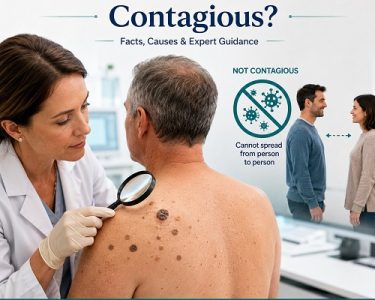
Although they may resemble warts or even skin cancer, seborrheic keratoses are not contagious and usually do not become cancerous.
What Are the Main Causes of Seborrheic Keratosis?
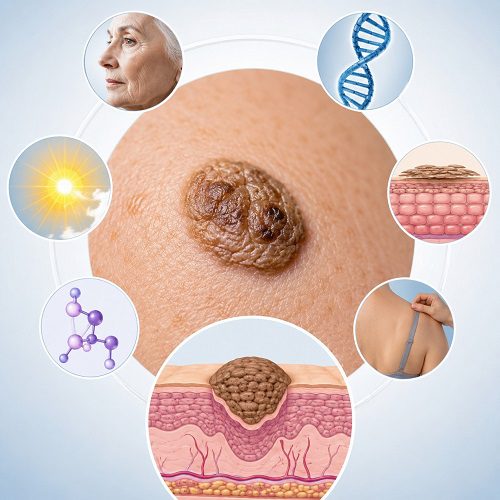
Despite extensive research, doctors still cannot identify one exact cause. Instead, several contributing factors appear to increase the likelihood of developing these skin growths.
1. Aging
The biggest factor among the causes of seborrheic keratosis is aging.
These growths are uncommon before age 30 but become increasingly common after age 40.
As skin cells age, they regenerate differently than they did in youth. Over time, certain groups of skin cells may multiply excessively, forming the characteristic raised lesions of seborrheic keratosis.
Older adults may develop:
- A single lesion
- Dozens of growths
- Hundreds of small spots over many years
This gradual increase is considered a normal part of skin aging.
2. Genetic Inheritance
Family history is another major contributor.
Researchers have observed that seborrheic keratosis often runs in families.
If one or both parents have multiple seborrheic keratoses, their children are significantly more likely to develop them later in life.
Certain inherited genetic mutations may encourage skin cells to grow more rapidly than normal.
Although genetics cannot be changed, knowing your family history can help explain why these growths appear.
3. Natural Skin Cell Changes
The skin constantly replaces old cells with new ones.
In seborrheic keratosis, this process becomes altered.
Instead of shedding normally, some skin cells accumulate, creating thickened, waxy patches.
These changes are not dangerous but represent an overgrowth of epidermal cells.
Scientists believe abnormalities in skin-cell signaling contribute to this excessive growth.
4. Sun Exposure
Although seborrheic keratoses also develop on covered areas of the body, many occur on skin exposed to sunlight.
Examples include:
- Face
- Neck
- Upper chest
- Shoulders
- Hands
Long-term ultraviolet (UV) exposure may contribute to skin aging, which indirectly increases the risk.
However, sun exposure alone is not considered a direct cause because many lesions develop in areas that receive little sunlight.
5. Hormonal Changes
Some people notice the sudden appearance of multiple seborrheic keratoses during periods of hormonal change.
Examples include:
- Pregnancy
- Menopause
- Hormonal fluctuations with aging
Although evidence remains limited, hormones may influence skin-cell growth in susceptible individuals.
6. Friction and Skin Irritation
Repeated rubbing may encourage certain lesions to become more noticeable.
Areas commonly affected include:
- Under the breasts
- Waistline
- Groin
- Neck
- Under clothing straps
Friction probably does not directly cause seborrheic keratosis but may stimulate growth in skin already predisposed to developing lesions.
7. Certain Genetic Mutations
Researchers have identified mutations in genes involved in skin growth, including:
- FGFR3
- PIK3CA
- TERT
These mutations are usually acquired during life rather than inherited from birth.
They affect how skin cells divide and mature.
Importantly, these mutations do not necessarily mean cancer is present.
Are Seborrheic Keratoses Caused by Viruses?
Unlike common warts, seborrheic keratoses are not caused by viruses.
Specifically:
- They are not caused by HPV.
- They are not contagious.
- They cannot spread through skin contact.
- They cannot be passed between family members.
This is an important distinction because many people mistake them for viral warts.
Can Stress Cause Seborrheic Keratosis?
There is currently no scientific evidence that stress directly causes seborrheic keratosis.
However, chronic stress can affect:
- Skin healing
- Immune function
- Inflammation
Some people notice new skin changes during stressful periods, but researchers have not established stress as one of the true causes of seborrheic keratosis.
Does Diet Cause Seborrheic Keratosis?
No specific food has been proven to cause seborrheic keratosis.
There is also no evidence that eating sugar, dairy, gluten, or processed foods directly produces these growths.
Maintaining a healthy diet supports overall skin health but cannot prevent seborrheic keratoses from developing.
Can Poor Hygiene Cause Seborrheic Keratosis?
Absolutely not.
Seborrheic keratosis has nothing to do with:
- Dirty skin
- Poor hygiene
- Infrequent bathing
- Skin infections
Even people with excellent skincare routines can develop numerous lesions.
Risk Factors That Increase the Chances
Several factors increase the likelihood of developing seborrheic keratosis.
These include:
- Age over 40
- Family history
- Fair skin
- Long-term sun exposure
- Multiple previous lesions
- Certain inherited skin tendencies
Having one or more risk factors does not guarantee that you will develop seborrheic keratosis, but it does make it more likely.
Why Do They Suddenly Appear?
Many people report waking up one day and noticing several new growths.
In reality, these lesions often develop slowly over months.
Initially they may appear as:
- Tiny rough spots
- Flat tan patches
- Slight discoloration
As they thicken, they become much easier to notice.
Occasionally, dozens of lesions appear within a relatively short period.
Rarely, the sudden eruption of numerous seborrheic keratoses may be associated with an internal medical condition, a phenomenon known as the Leser-Trélat sign. Because this is uncommon, rapid development of many new lesions should be evaluated by a healthcare professional.
How Skin Changes Lead to Seborrheic Keratosis
The skin contains specialized cells called keratinocytes.
Normally these cells:
- Grow.
- Mature.
- Move toward the skin surface.
- Shed naturally.
In seborrheic keratosis:
- Cell turnover becomes abnormal.
- Keratin accumulates.
- Skin thickens.
- Waxy layers develop.
- Raised plaques form.
This explains why the lesions often feel rough and appear “stuck on” the skin.
Common Symptoms
Understanding symptoms can help distinguish seborrheic keratosis from other skin conditions.
Typical characteristics include:
- Raised growth
- Waxy appearance
- Rough texture
- Round or oval shape
- Brown, black, tan, or yellow color
- Well-defined borders
- Slow growth
Some lesions become itchy or irritated, especially when rubbed by clothing.
Areas Most Commonly Affected
Seborrheic keratosis usually develops on:
- Back
- Chest
- Face
- Neck
- Abdomen
- Shoulders
- Arms
They usually spare:
- Palms
- Soles
- Lips
- Inside the mouth
What Makes Seborrheic Keratosis Worse?
Although the underlying causes of seborrheic keratosis cannot usually be controlled, some factors may make existing lesions more noticeable.
Examples include:
- Constant scratching
- Clothing friction
- Skin irritation
- Dry skin
- Aging
These factors generally affect symptoms rather than creating new growths.
Can Seborrheic Keratosis Be Prevented?
Can Seborrheic Keratosis Be Prevented? Because aging and genetics play major roles, complete prevention is not currently possible.
However, healthy skin habits may support overall skin health.
These include:
- Wearing sunscreen daily
- Avoiding excessive UV exposure
- Moisturizing dry skin
- Avoiding unnecessary irritation
- Performing regular skin self-examinations
Although these steps cannot guarantee prevention, they promote healthier skin over time.
When Should You See a Doctor?
Most seborrheic keratoses are harmless.
However, seek medical evaluation if a growth:
- Changes rapidly
- Bleeds without injury
- Develops irregular borders
- Becomes extremely painful
- Changes color dramatically
- Looks very different from your other lesions
- Ulcerates or forms an open sore
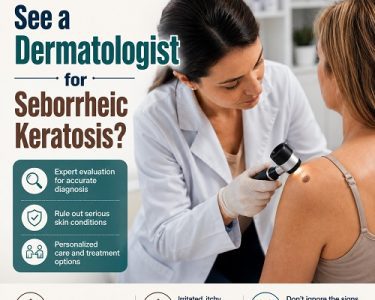
A dermatologist may examine the lesion using dermoscopy or recommend a biopsy if there is any uncertainty about the diagnosis.
Treatment Options
Seborrheic Keratoses Treatment is usually unnecessary unless the lesion becomes:
- Irritated
- Itchy
- Frequently caught on clothing
- Cosmetically bothersome
- Difficult to distinguish from skin cancer
Common medical treatments include:
- Cryotherapy (freezing with liquid nitrogen)
- Curettage (gentle scraping)
- Electrocautery
- Laser therapy
- Minor surgical removal
These procedures are generally quick and performed in an outpatient setting.
Natural Remedies for Seborrheic Keratosis
Many people look for Natural Remedies for Seborrheic Keratosis to support healthy skin and relieve mild irritation caused by these common, non-cancerous skin growths. While there is no scientific evidence that natural remedies can remove seborrheic keratoses, some may help soothe the surrounding skin and improve overall skin health. It is important to remember that any changing or suspicious skin lesion should be evaluated by a healthcare professional.
Popular Natural Remedies for Seborrheic Keratosis include applying pure aloe vera gel to moisturize the skin, using diluted tea tree oil with caution to avoid irritation, and moisturizing regularly with coconut oil to reduce dryness. Some people also choose antioxidant-rich foods, such as berries, leafy greens, and nuts, to support healthy skin from within. Maintaining good hydration, protecting your skin from excessive sun exposure, and following a balanced diet can also contribute to overall skin wellness.
If you are considering a Natural Treatment for Seborrheic Keratosis, avoid attempting to cut, scrape, or burn the growth at home, as this can lead to infection, scarring, or an incorrect diagnosis. Natural approaches are best viewed as supportive care rather than a cure. If the growth becomes painful, bleeds, changes in appearance, or causes concern, consult a dermatologist for an accurate diagnosis and appropriate treatment options.
Myths About the Causes of Seborrheic Keratosis
Several misconceptions surround these common skin growths.
Myth: Seborrheic keratosis is skin cancer.
Fact: It is a benign growth, although suspicious lesions should always be evaluated.
Myth: It is contagious.
Fact: It cannot spread through touch.
Myth: Poor hygiene causes it.
Fact: Cleanliness has no role in its development.
Myth: Scratching creates new lesions.
Fact: Scratching may irritate existing growths but does not cause new ones.
Myth: Diet is the main cause.
Fact: No food has been proven to cause seborrheic keratosis.
Living With Seborrheic Keratosis
Many adults live with seborrheic keratosis for decades without complications. These growths often increase gradually in number with age, but they usually remain harmless. Keeping your skin moisturized, protecting it from excessive sun exposure, and avoiding unnecessary irritation can help maintain skin comfort. If a lesion becomes bothersome or changes in appearance, consult a healthcare professional rather than attempting to remove it at home.
Conclusion
The exact causes of seborrheic keratosis remain uncertain, but research strongly suggests that aging, inherited genetics, natural skin-cell changes, and long-term environmental factors all contribute to their development. While sun exposure, hormonal changes, and friction may influence when or where lesions appear, they are not considered the sole cause.
Seborrheic keratoses are extremely common, especially in middle-aged and older adults, and they are almost always benign. Understanding the causes of seborrheic keratosis can provide reassurance and help you recognize when a skin growth is likely harmless. However, any lesion that changes rapidly, bleeds, or looks unusual should be evaluated by a dermatologist to rule out skin cancer and ensure appropriate care.