
 By
By A lipoma on back is one of the most common types of benign fatty growths that develop beneath the skin. While discovering a lump on your back can be alarming, most back lipomas are harmless, slow-growing, and rarely require immediate medical treatment. However, knowing when to monitor the lump and when to seek medical attention is important for protecting your health.
A lipoma usually feels soft, movable, and painless. Many people live with one for years without experiencing any problems. In some cases, however, a lipoma can become uncomfortable due to its size, location, or pressure on nearby muscles and nerves. This may lead to discomfort, limited movement, or cosmetic concerns.
What Is a Lipoma on the Back?
A lipoma is a non-cancerous growth made up of mature fat cells. It develops just beneath the skin and can appear almost anywhere on the body where fat tissue exists. The back is among the most common locations because it contains a significant amount of fatty tissue.
A back lump lipoma typically grows slowly over several months or years. It usually remains soft, round or oval, and can be gently moved beneath the skin with your fingers.
Unlike cancerous tumors, lipomas generally do not invade nearby tissues or spread to other parts of the body.
Common Characteristics
- Soft and rubbery texture
- Slow-growing
- Usually painless
- Easily movable under the skin
- Round or oval shape
- Often between 1–5 cm in size
- Skin over the lump appears normal
Many individuals only notice their lipoma while showering, changing clothes, or receiving a massage.
What Causes a Lipoma on Back?
Doctors still do not know the exact cause of lipomas. Several factors appear to increase the likelihood of developing one.
Genetics
Family history plays a significant role. People with relatives who have lipomas are more likely to develop them.
Age
Most lipomas occur between ages 40 and 60, although they can develop at any age.
Minor Injury
Some people report noticing a lipoma after minor trauma to the back. While injury does not directly cause lipomas, it may draw attention to an existing lump.
Genetic Conditions
Certain inherited disorders increase the risk of multiple lipomas, including:
- Familial Multiple Lipomatosis
- Gardner Syndrome
- Madelung Disease
- Dercum Disease
Back Lipoma Symptoms
Most people experience very few symptoms. However, back lipoma symptoms can vary depending on the size and location of the growth.
Common symptoms include:
- Soft lump beneath the skin
- Lump moves when touched
- Slow increase in size
- Usually painless
- Skin remains normal
- No redness or warmth
Many people forget they even have one until someone else notices it.
Painful Lipoma on Back
Although most lipomas do not hurt, a painful lipoma on back is possible.
Pain may occur if the lipoma:
- Presses against nearby nerves
- Compresses muscles
- Grows into deeper tissues
- Becomes inflamed
- Is frequently irritated by clothing, backpacks, or chairs
Pain does not automatically mean cancer, but persistent discomfort should always be evaluated by a healthcare professional.
How Big Can a Back Lipoma Become?
Most lipomas stay relatively small.
Typical sizes include:
- Small: under 2 cm
- Medium: 2–5 cm
- Large: over 5 cm
- Giant lipoma: larger than 10 cm
Large lipomas may interfere with movement, sleep, exercise, or posture.
Is a Lipoma on the Back Dangerous?
Fortunately, the vast majority are harmless.
A lipoma on back is considered benign, meaning it is not cancer.
Most never become cancerous.
However, medical evaluation is recommended if the lump:
- Grows rapidly
- Becomes painful
- Feels hard instead of soft
- Is fixed to underlying tissues
- Causes numbness
- Changes shape suddenly
- Becomes larger than 5 cm
These features may require additional testing to rule out other conditions.
Conditions That Can Be Mistaken for a Back Lump Lipoma
Not every lump on the back is a lipoma.
Other possibilities include:
Epidermoid Cyst
Contains keratin instead of fat and may become infected.
Develops from blocked oil glands.
Abscess
A bacterial infection filled with pus.
Hematoma
Collection of blood after injury.
Enlarged Lymph Node
Usually occurs in the upper back or Lipoma on the Neck.
Liposarcoma
A rare cancer of fatty tissue that usually grows quickly and feels firmer than a lipoma.
Because these conditions can appear similar, proper diagnosis is important.
How Doctors Diagnose a Lipoma
Diagnosis usually begins with a physical examination.
Your healthcare provider will check:
- Size
- Shape
- Texture
- Mobility
- Tenderness
- Growth history
If the diagnosis is uncertain, imaging tests may be recommended.
Ultrasound
Shows whether the lump contains fat or fluid.
MRI Scan
Provides detailed images of deeper tissues.
CT Scan
May be used for larger or deeper growths.
Biopsy
A small tissue sample may be taken if cancer cannot be ruled out.
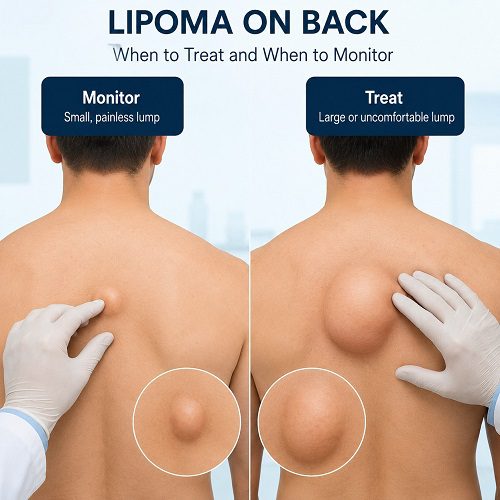
When to Monitor a Lipoma on Back
Many lipomas do not require treatment.
Observation is appropriate if the lipoma:
- Is painless
- Is small
- Has not changed in size
- Does not affect movement
- Does not interfere with daily life
- Has typical features of a benign lipoma
Your doctor may simply recommend periodic checkups.
Take note of the size every few months and report any changes.
When Should a Lipoma Be Treated?
Treatment becomes more appropriate under certain circumstances.
You should consider treatment if the lipoma:
- Causes pain
- Continues growing
- Restricts movement
- Causes cosmetic concerns
- Becomes irritated repeatedly
- Compresses nearby nerves
- Creates uncertainty about diagnosis
Many people choose removal simply because the lump becomes bothersome.
Treatment Options
Surgical Removal
Surgical excision is the most effective treatment for lipoma.
The surgeon:
- Administers local anesthesia
- Makes a small incision
- Removes the entire fatty mass
- Closes the skin with stitches
Most patients return home the same day.
Complete removal has a low recurrence rate.
Liposuction
Smaller lipomas may sometimes be treated using liposuction.
Advantages include:
- Smaller incision
- Faster healing
- Less scarring
However, some fatty tissue may remain, increasing the chance of recurrence.
Steroid Injections
Steroid injections may shrink certain lipomas but rarely eliminate them completely.
This option is less common than surgery.
Recovery After Lipoma Removal
Recovery is generally straightforward.
Most patients experience:
- Mild soreness
- Minor swelling
- Small scar
- Return to normal activities within several days
Large lipomas removed from deeper tissues may require a slightly longer recovery period.
Following wound care instructions reduces the risk of lipoma infection.
Can a Lipoma Come Back?
Recurrence is uncommon after complete surgical removal.
However, a lipoma may return if:
- Part of the fatty capsule remains
- Multiple lipomas are part of a genetic condition
Most patients never require additional treatment.
Can You Prevent Lipomas?
Unfortunately, there is no proven method to prevent lipomas.
Healthy lifestyle habits support overall wellness but cannot guarantee prevention.
Helpful habits include:
- Maintaining a healthy weight
- Eating a balanced diet
- Regular physical activity
- Avoiding smoking
- Attending routine medical checkups
These measures improve overall health but do not directly stop lipoma formation.
Living with a Lipoma on Back
Many people successfully live with a lipoma for decades.
Monitoring is often the best approach when the lump is:
- Stable
- Painless
- Small
- Properly diagnosed
Simple self-monitoring includes:
- Checking for changes every few months
- Photographing the lump occasionally
- Measuring its size
- Reporting new symptoms to your doctor
When to Contact a Doctor Immediately
Although lipomas are usually harmless, seek prompt medical evaluation if you notice:
- Rapid growth
- Severe pain
- Redness
- Warmth
- Drainage
- Fever
- Hard texture
- Fixed lump
- Numbness
- Muscle weakness
These symptoms require professional assessment.
Frequently Asked Questions
Is a lipoma on back cancer?
No. Most lipomas are benign and are not cancerous.
Can a back lipoma disappear naturally?
Lipomas rarely disappear without treatment. They usually remain stable or grow slowly over time.
Should I massage a lipoma?
Massage will not remove a lipoma. Repeated pressure may increase irritation if the lump is already tender.
Does losing weight shrink a lipoma?
Weight loss may reduce overall body fat but usually does not significantly shrink a lipoma because it consists of encapsulated fat cells.
Can exercise remove a lipoma?
Exercise cannot eliminate a lipoma. Physical activity remains beneficial for overall health but does not dissolve fatty tumors.
Can a painful lipoma on back become dangerous?
Pain alone does not necessarily indicate a serious problem. However, persistent pain or rapid changes should be evaluated by a healthcare provider to confirm the diagnosis.
Conclusion
A lipoma on back is one of the most common benign fatty growths found beneath the skin. Most remain painless, grow slowly, and never require treatment. Careful monitoring is often sufficient when the lump is small, soft, movable, and stable over time.
However, increasing size, persistent discomfort, back lipoma symptoms, or the development of a painful lipoma on back should prompt medical evaluation. Modern diagnostic tools can distinguish a back lump lipoma from other conditions, while surgical removal offers a safe and highly effective treatment when necessary.
Understanding the warning signs and knowing when to monitor versus when to treat allows you to make informed decisions and seek medical care when appropriate. If you discover any new or changing lump on your back, consulting a qualified healthcare professional is the best way to ensure an accurate diagnosis and peace of mind.