 By
Atrial fibrillation (AFib) is one of the most common types of irregular heart rhythm. It occurs when abnormal electrical signals cause the heart’s upper chambers, called the atria, to beat irregularly. Some people experience occasional heart palpitations, fatigue, dizziness, or shortness of breath, while others have no noticeable symptoms.
Although atrial fibrillation can often be managed with appropriate medical treatment, certain symptoms may indicate a life-threatening emergency. Recognizing these warning signs and knowing when to seek emergency care for Atrial Fibrillation can help prevent serious complications, including stroke, heart failure, and heart attack.
Not every episode of AFib requires an emergency department visit. However, symptoms such as chest pain, severe breathing difficulties, fainting, or sudden neurological changes should never be ignored. The warning signs of an AFib emergency, when to contact emergency services, what to do while waiting for help, and how to reduce the risk of future complications.
What Is Atrial Fibrillation?
Atrial fibrillation is an abnormal heart rhythm, or arrhythmia, in which the atria quiver instead of contracting in a coordinated manner. This irregular activity can cause the heart to beat too quickly or inefficiently.
As a result, blood may not move through the heart as effectively as it should. Blood can pool in the atria, increasing the possibility of clot formation. If a clot travels to the brain, it can cause an ischemic stroke.
AFib may occur occasionally, persist for extended periods, or become a long-term condition. Its symptoms and severity vary from person to person.
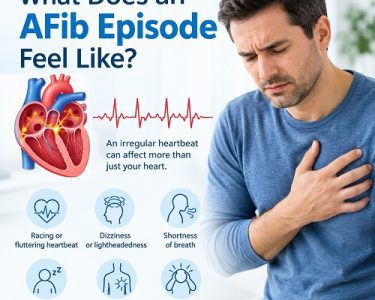
Common Atrial Fibrillation symptoms include:
- A racing, fluttering, or pounding heartbeat.
- An irregular pulse.
- Unusual tiredness or weakness.
- Shortness of breath.
- Dizziness or lightheadedness.
- Reduced ability to exercise.
- Chest discomfort or pressure.
- Feeling faint or unusually anxious.
Some people discover they have AFib during a routine medical examination because they experience no obvious symptoms.
According to the American Heart Association, AFib is associated with increased risks of stroke and heart failure. Appropriate assessment and treatment can help manage these risks.
When to Seek Emergency Care for Atrial Fibrillation
The most important distinction is between familiar, stable AFib symptoms and symptoms that could indicate an immediate threat to your health.
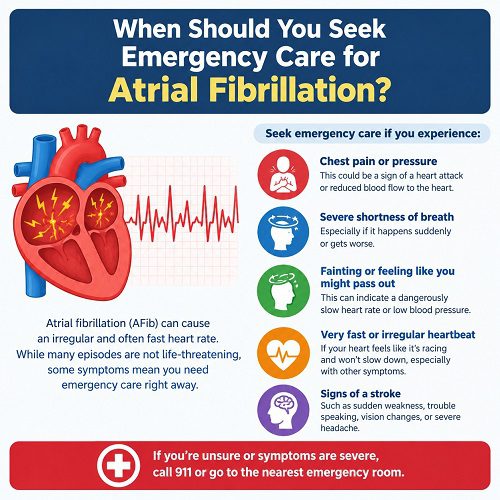
Call your local emergency number immediately if you experience a rapid or irregular heartbeat accompanied by any of the following:
- Chest pain, pressure, tightness, or squeezing.
- Severe or sudden shortness of breath.
- Fainting, collapse, or near-fainting with significant symptoms.
- Sudden weakness or numbness, particularly on one side of the body.
- Difficulty speaking, confusion, or sudden vision changes.
- Severe dizziness accompanied by other concerning symptoms.
- Cold sweats, nausea, or other symptoms suggesting a possible heart attack.
These symptoms may be caused by a heart attack, stroke, a dangerously fast heart rhythm, or another serious condition. It is not possible to determine the cause safely at home.
Do not wait for symptoms to become more severe. Do not drive yourself to the hospital when a cardiac or neurological emergency is suspected.
If you are unsure whether your symptoms are serious, contact emergency services or follow the urgent-care instructions provided by your healthcare professional.
1. Atrial Fibrillation Chest Pain: A Major Warning Sign
Chest pain is one of the most important symptoms to recognize in someone with AFib.
Although some people experience mild chest discomfort during an irregular heartbeat, Atrial Fibrillation chest pain should never automatically be attributed to AFib itself. Chest discomfort may indicate a heart attack or another potentially dangerous cardiovascular problem.
Seek emergency care if you experience chest pain or pressure, especially when it:
- Feels like squeezing, heaviness, tightness, or pressure.
- Lasts more than a few minutes or repeatedly returns.
- Spreads to the arm, shoulder, back, neck, jaw, or upper abdomen.
- Occurs with shortness of breath.
- Is accompanied by nausea, sweating, weakness, or lightheadedness.
A heart attack does not always cause dramatic or severe pain. Some people experience relatively mild discomfort or symptoms that develop gradually.
If you have AFib and develop new, unexplained, or worsening chest pain, call emergency services immediately. Do not assume that a familiar irregular heartbeat explains the discomfort.
Prompt medical evaluation can help clinicians identify or rule out a heart attack and other serious causes of chest pain.
2. Severe Shortness of Breath
Shortness of breath can occur during Atrial Fibrillation because the heart may not pump blood as efficiently when its rhythm is irregular or excessively fast.
Mild breathlessness may occur in some people with AFib. However, sudden, severe, or rapidly worsening breathing difficulties require emergency assessment.
Call emergency services if you experience:
- Difficulty breathing while resting.
- An inability to speak comfortably because of breathlessness.
- Sudden breathlessness accompanied by chest pain.
- Breathing difficulties associated with faintness, confusion, or cold sweats.
- Severe breathlessness when lying down, particularly if it develops suddenly.
These symptoms can sometimes indicate heart failure, fluid accumulation in the lungs, a heart attack, or another serious condition.
Do not attempt to manage severe breathing difficulties by taking extra doses of heart medication unless emergency clinicians specifically instruct you to do so.
Sit in a comfortable position while waiting for help, and avoid physical exertion.
3. Recognizing Stroke Symptoms Associated With AFib
Stroke is one of the most serious complications associated with atrial fibrillation.
Because AFib can promote blood clot formation, a clot may travel through the bloodstream and block an artery supplying the brain. This can cause an ischemic stroke.
Stroke symptoms often appear suddenly and may include:
- Facial drooping or numbness on one side.
- Weakness or numbness in one arm or leg, particularly on one side.
- Slurred speech or difficulty speaking.
- Difficulty understanding other people.
- Sudden loss or changes in vision.
- Unexpected loss of balance or coordination.
- Sudden confusion.
- A severe headache with no known cause.
Remember the B.E. F.A.S.T. warning signs:
B — Balance: Sudden difficulty walking or maintaining balance.
E — Eyes: Sudden vision loss or other significant vision changes.
F — Face: One side of the face droops.
A — Arms: One arm becomes weak or numb.
S — Speech: Speech becomes slurred or difficult to understand.
T — Time: Call emergency services immediately.
Even if these symptoms disappear after a few minutes, emergency assessment is essential. Temporary symptoms may indicate a transient ischemic attack (TIA), which can precede a more serious stroke.
Note the time symptoms began, if possible, and tell the emergency team. Do not wait to see whether the symptoms return.
4. Fainting, Severe Dizziness, or Sudden Weakness
People with Atrial Fibrillation may experience dizziness or lightheadedness, particularly during episodes of a rapid heart rate. However, severe dizziness, fainting, or sudden weakness can indicate that the brain is not receiving adequate blood flow or that another serious problem is occurring.
Seek emergency help if you:
- Lose consciousness or collapse.
- Feel as though you may faint while experiencing a rapid or irregular heartbeat.
- Develop sudden, severe dizziness with chest discomfort or breathlessness.
- Experience confusion, profound weakness, or difficulty remaining alert.
Fainting can have several causes, including dangerously abnormal heart rhythms, blood pressure changes, and other cardiovascular conditions.
If someone becomes unresponsive and is not breathing normally, call emergency services immediately and follow the dispatcher’s instructions. Begin CPR and use an automated external defibrillator (AED) if available and appropriate.
Do not assume that fainting is harmless simply because the person regains consciousness quickly.
5. A Very Fast or Persistent Irregular Heartbeat
AFib can cause the heart to beat rapidly and irregularly. Some people have a familiar pattern of palpitations that their clinician has already assessed.
Nevertheless, a new, unusually rapid, persistent, or markedly different heartbeat deserves prompt medical attention, especially when accompanied by other symptoms.
Call emergency services if a rapid or irregular heartbeat occurs with chest pain, severe breathlessness, fainting, or signs of stroke.
Contact your healthcare professional urgently if the heartbeat remains unusually fast, episodes are becoming more frequent, or your usual treatment no longer controls your symptoms—even if you do not have obvious emergency warning signs.
There is no single heart-rate number that reliably determines whether every person with AFib needs emergency care. The significance of a heart rate depends on symptoms, blood pressure, other medical conditions, medications, and the underlying rhythm.
Do not change your prescribed medication dose solely to lower your heart rate without guidance from your clinician.
6. When AFib Symptoms Do Not Require an Emergency Department Visit
Not every AFib episode is a medical emergency. Some people have intermittent symptoms that resolve on their own or follow a familiar pattern.
However, symptoms that are mild do not necessarily mean the condition is harmless.
If you have a previously diagnosed AFib condition and experience familiar, stable palpitations without chest pain, severe breathlessness, fainting, or neurological symptoms, contact your healthcare professional for advice according to your individualized care plan.
Arrange a medical appointment if you notice:
- New or recurring palpitations.
- Increasing fatigue.
- Mild but persistent breathlessness.
- Reduced exercise tolerance.
- Episodes that last longer than usual.
- Symptoms that are becoming more frequent.
- Treatment that no longer seems effective.
If symptoms worsen or any emergency warning sign develops, escalate to emergency care immediately.
People who have never been diagnosed with AFib should not assume that an irregular heartbeat is caused by this condition. Other arrhythmias and medical problems can produce similar symptoms and require appropriate evaluation.
7. What Should You Do During an AFib Emergency?
Knowing what to do during a suspected emergency can help you respond quickly and safely.
Step 1: Call emergency services
Call your local emergency number if you experience chest pain, severe shortness of breath, fainting, or stroke symptoms. In the United States and Canada, call 911; in the United Kingdom, call 999.
Use the emergency number applicable to your location.
Step 2: Stop physical activity
Sit or rest in a comfortable position while waiting for help. Avoid walking around, exercising, or performing strenuous activities.
Step 3: Do not drive yourself
If a heart attack, stroke, or serious rhythm problem is possible, an ambulance is the safer option. Emergency personnel can begin assessment and treatment during transport.
Step 4: Prepare your medical information
If doing so does not delay emergency assistance, gather information about your medications, allergies, medical conditions, and previous AFib episodes.
Tell responders if you take anticoagulants, commonly called blood thinners, because this information may influence treatment decisions.
Step 5: Follow professional instructions
Take medications only as prescribed or as specifically directed by emergency clinicians. Do not take extra doses of heart-rate medication or anticoagulants to treat the episode independently.
Do not start aspirin or another medication for suspected heart attack or stroke unless a qualified professional or emergency dispatcher advises you to do so.
Step 6: Record when symptoms started
If stroke is suspected, the time symptoms began—or the last time the person was known to be well—may help clinicians determine the most appropriate treatment.
Most importantly, never delay calling for help to complete these steps.
8. What Happens at the Emergency Department?
When you arrive at the emergency department, clinicians will assess your symptoms, circulation, blood pressure, oxygen levels, and heart rhythm.
The specific tests and treatments depend on your condition and the suspected cause of your symptoms.
Electrocardiogram (ECG)
An ECG records the heart’s electrical activity and can help identify AFib or another abnormal rhythm.
Blood tests
Blood tests may help identify heart muscle injury, electrolyte abnormalities, thyroid problems, or other conditions contributing to your symptoms.
Additional cardiac testing
Depending on your presentation, clinicians may recommend continuous heart monitoring, an echocardiogram, chest imaging, or other investigations.
If a heart attack or stroke is suspected, additional emergency-specific tests may be necessary.
Treatment
Treatment depends on the underlying problem. It may involve medication to control heart rate, treatment to restore a safer rhythm, management of heart failure, or urgent treatment for a heart attack or stroke.
If AFib causes severe instability, clinicians may perform synchronized electrical cardioversion when indicated.
The emergency team will also consider your risk of blood clots and whether anticoagulation is appropriate.
Not everyone with AFib needs the same treatment, and treatment decisions depend on the person’s clinical condition and medical history.
9. Why You Should Never Ignore AFib Symptoms
Untreated or inadequately managed AFib can contribute to serious complications.
Stroke: Blood clots associated with AFib can travel to the brain and block blood flow.
Heart failure: Persistent rapid heart rates or underlying cardiovascular disease can impair the heart’s pumping function.
Heart attack: AFib symptoms may occur alongside a heart attack, and chest discomfort should never be dismissed.
Other heart rhythm complications: Some rhythm disturbances can impair circulation and cause severe symptoms.
The absence of symptoms does not eliminate the risk of complications. Some people have AFib without experiencing noticeable palpitations or other warning signs.
Regular follow-up, appropriate medication, and individualized stroke prevention strategies remain important even when you feel well.
10. How to Reduce the Risk of Future AFib Emergencies
Although not every AFib episode can be prevented, consistent management can reduce complications and help you recognize problems earlier.
Consider the following measures:
- Take prescribed medication consistently. Do not stop anticoagulants or heart-rate medications without consulting your healthcare professional.
- Attend regular follow-up appointments. Your clinician can assess symptoms, heart rhythm, stroke risk, and treatment effectiveness.
- Monitor changes in symptoms. Keep a record of episodes, their duration, possible triggers, and associated symptoms.
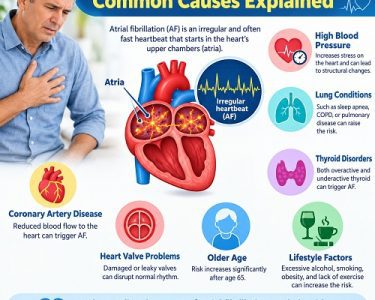
- Manage blood pressure. High blood pressure is an important risk factor for AFib and cardiovascular disease.
- Address sleep apnea and other medical conditions. Appropriate treatment may help improve overall cardiovascular health.
- Limit alcohol if advised. Alcohol can trigger AFib episodes in some people.
- Maintain a heart-healthy lifestyle. Regular physical activity appropriate for your condition, a balanced diet, and weight management can support cardiovascular health.
- Avoid unapproved medication changes. Ask your clinician before using new medicines or supplements that could affect your heart rhythm.
Ask your healthcare professional to provide a written action plan explaining what to do if your AFib returns, which symptoms require emergency care, and whom to contact for non-emergency concerns.
11. Natural Treatment for Atrial Fibrillation
Atrial fibrillation (AFib) is a common heart rhythm disorder that causes an irregular and often rapid heartbeat. While medical treatment is essential for managing this condition, certain lifestyle changes can support heart health and improve overall well-being. Exploring Natural Remedies for Atrial Fibrillation may help complement a doctor-approved treatment plan.
Effective Natural Approaches
- Follow a Heart-Healthy Diet: Eat plenty of fruits, vegetables, whole grains, lean proteins, and healthy fats. Limit processed foods, excess salt, and unhealthy fats to support cardiovascular health.
- Exercise Regularly: Moderate physical activity, such as walking, swimming, or cycling, can improve heart health. Consult your healthcare provider before starting a new exercise routine.
- Manage Stress: Stress may trigger AFib episodes in some people. Deep breathing, meditation, yoga, and adequate sleep can help promote relaxation.
- Limit Caffeine and Alcohol: Alcohol can trigger irregular heart rhythms, while excessive caffeine may cause palpitations in some individuals. Identify personal triggers with medical guidance.
- Maintain a Healthy Weight: Weight management and treating conditions such as sleep apnea and high blood pressure may help reduce AFib burden.
Frequently Asked Questions
Can atrial fibrillation go away on its own?
Some AFib episodes stop spontaneously, while others persist and require treatment. Even if symptoms disappear, recurring episodes should be discussed with a healthcare professional. Stroke risk and treatment needs depend on individual circumstances, not simply whether the rhythm returns to normal.
Is chest pain normal with AFib?
Chest discomfort can occur with AFib, but it should not automatically be considered a normal symptom. Chest pain or pressure may indicate a heart attack or another serious condition. Call emergency services if you develop chest pain, particularly when accompanied by breathlessness, sweating, nausea, or dizziness.
How long can I wait before seeking care for AFib?
There is no universally safe waiting period. Chest pain, severe breathing difficulties, fainting, or stroke symptoms require immediate emergency assessment. New, persistent, or worsening palpitations without emergency warning signs still warrant prompt medical advice.
Can AFib cause a stroke without warning?
Yes. Some people with AFib experience few or no noticeable symptoms but remain at increased risk of stroke. Appropriate assessment of stroke risk and adherence to prescribed preventive treatment are essential.
Should I go to the hospital if my AFib symptoms stop?
If you experienced chest pain, fainting, severe breathlessness, or possible stroke symptoms, seek emergency assessment even if the symptoms have resolved. For less severe episodes, contact your clinician and follow your individualized care plan.
Conclusion
Knowing when to seek emergency care for Atrial Fibrillation is an essential part of protecting your heart and overall health. While some episodes cause only familiar palpitations or mild discomfort, other symptoms may indicate a heart attack, stroke, or dangerous cardiovascular complication.
Call emergency services immediately for chest pain or pressure, severe shortness of breath, fainting, or sudden neurological symptoms. Do not wait for symptoms to disappear, and never drive yourself when a serious emergency is suspected.
For recurring or worsening symptoms without emergency warning signs, arrange prompt medical evaluation. Consistent follow-up, appropriate medication, stroke prevention, and a clear emergency action plan can help people with AFib manage their condition more safely.
Medical disclaimer
This article is intended for general educational purposes and does not replace professional medical advice, diagnosis, or treatment. If you believe you are experiencing a medical emergency, contact your local emergency services immediately.
Medical references
The following authoritative sources support the article’s medical guidance and are suitable for inclusion at the end of the published post.
- American Heart Association — What Are the Symptoms of Atrial Fibrillation?
Covers AFib symptoms, chest discomfort, stroke warning signs, and heart attack symptoms.
- NHS — Atrial Fibrillation
Explains symptoms requiring emergency assistance, diagnosis, treatment, and ongoing management.
- American Heart Association — 2021 Guideline for the Evaluation and Diagnosis of Chest Pain: Key Points
Read the chest pain guideline summary
Supports the recommendation to seek immediate medical attention for acute chest pain and related warning symptoms.
- American Heart Association — Heart Attack and Stroke Symptoms