 By
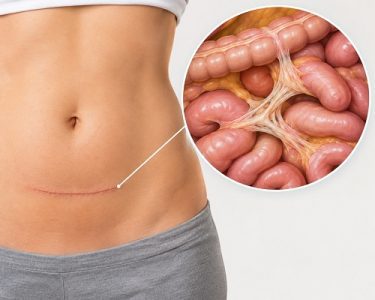
By Abdominal adhesions are bands of scar tissue that can form between tissues and organs inside the abdomen. They commonly develop after abdominal or pelvic surgery, but infections, inflammation, endometriosis and other conditions can also contribute to their formation. While many adhesions cause no symptoms, some can affect the normal movement or position of reproductive organs.
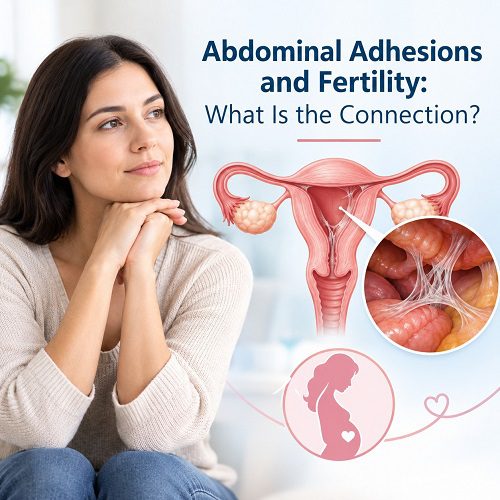
The connection between abdominal adhesions and fertility is particularly important for people who are trying to conceive. Adhesions in the pelvis may involve the fallopian tubes, ovaries, uterus or surrounding tissues. Depending on their location and severity, they can interfere with the normal movement of an egg or sperm and may make conception more difficult. How abdominal adhesions can affect fertility, what causes them, which symptoms may occur, how doctors diagnose them and what treatment options may be considered.
What Are Abdominal Adhesions?
What Are Abdominal Adhesions? Abdominal adhesions are areas of internal scar tissue that cause tissues or organs to stick together when they would normally move freely.
Your abdominal and pelvic organs are surrounded by smooth surfaces that allow them to move against one another. After tissue injury or inflammation, the body’s healing process can produce scar tissue. In some cases, this scar tissue develops into adhesions.
Adhesions can occur anywhere within the abdomen, including the pelvis. Pelvic adhesions may involve:
- Fallopian tubes
- Ovaries
- Uterus
- Bladder
- Bowel
- Abdominal lining
The presence of an adhesion does not automatically mean that fertility will be affected. Its impact depends largely on where the adhesion develops, how extensive it is and which organs it involves.
What Is the Connection Between Abdominal Adhesions and Fertility?
The relationship between abdominal adhesions and fertility is mainly related to changes in the normal anatomy and movement of reproductive organs.
For conception to occur naturally, an egg must be released from an ovary, enter the fallopian tube and travel through the reproductive tract. Sperm must also reach the egg. After fertilisation, the resulting embryo normally travels through the fallopian tube toward the uterus.
Adhesions can interfere with these processes in several ways.
For example, scar tissue around a fallopian tube may cause the tube to become bent, narrowed or fixed in an abnormal position. An adhesion around an ovary may interfere with the normal relationship between the ovary and fallopian tube.
In some cases, extensive pelvic adhesions can distort the normal anatomy of the reproductive organs. This may reduce the likelihood of natural conception.
However, having abdominal adhesions does not necessarily cause infertility. Some people with adhesions conceive naturally without difficulty, while others may experience problems depending on the severity and location of the scar tissue.
How Can Pelvic Adhesions Affect the Fallopian Tubes?
The fallopian tubes play a central role in natural conception. They provide the usual pathway for the egg and sperm to meet.
After ovulation, the egg is released from the ovary and needs to be captured by the nearby end of the fallopian tube. If adhesions change the position of the ovary or tube, this process may become less efficient.
Adhesions may also affect the tube itself. Scar tissue can cause the tube to become:
- Bent
- Tethered to surrounding tissues
- Partially blocked
- Distorted
- Less mobile
A blockage or significant distortion of a fallopian tube can reduce the chance of sperm reaching an egg or prevent the fertilised egg from travelling normally toward the uterus.
This is one reason why pelvic adhesions and infertility may sometimes be associated.
Can Abdominal Surgery Cause Adhesions That Affect Fertility?
Yes. Abdominal and pelvic surgery is one of the common causes of adhesions.
Surgery can cause temporary inflammation and tissue injury. During healing, scar tissue may form and connect nearby surfaces. Procedures involving the pelvis may be particularly relevant because they can occur close to the reproductive organs.
Examples of operations that may be followed by adhesions include:
- Caesarean section
- Ovarian surgery
- Fallopian tube surgery
- Endometriosis surgery
- Fibroid surgery
- Appendectomy
- Bowel surgery
- Other pelvic procedures
Having surgery does not mean that fertility will necessarily be affected. Many people become pregnant normally after abdominal or pelvic surgery.
The potential effect depends on the operation, the extent of tissue healing and whether adhesions develop around reproductive organs.
Can a C-Section Cause Fertility Problems Because of Adhesions?
A Caesarean section can lead to internal scar tissue, and adhesions may develop afterward. In some cases, these adhesions can involve structures within the pelvis.
However, it is important to distinguish between having adhesions and having infertility caused by adhesions. Most people who have had a C-section do not automatically develop fertility problems because of it.
When fertility difficulties occur after a C-section, doctors consider many possible causes. Adhesions are only one potential factor.
If you have previously had a C-section and are experiencing difficulty conceiving, a healthcare professional can assess your individual circumstances rather than assuming that adhesions are responsible.
Other Causes of Abdominal and Pelvic Adhesions
Surgery is not the only possible cause.
Adhesions can also develop following inflammation, infection or conditions that affect the pelvic organs.
Possible Abdominal Adhesions causes include:
Endometriosis
Endometriosis can cause inflammation and scar tissue in the pelvis. Over time, this may result in adhesions involving the ovaries, fallopian tubes or other pelvic structures.
Endometriosis itself can also affect fertility, so determining the underlying cause of conception difficulties can be important.
Pelvic infections
Certain pelvic infections can cause inflammation and subsequent scar tissue. Pelvic inflammatory disease, for example, can damage the fallopian tubes and may increase the risk of fertility problems.
Abdominal inflammation
Inflammatory conditions affecting abdominal organs can sometimes lead to scar tissue formation.
Previous abdominal injury
Significant inflammation or tissue damage following an abdominal injury may contribute to adhesion formation.
What Symptoms Can Abdominal Adhesions Cause?
Many abdominal adhesions produce no symptoms at all.
When Abdominal Adhesions symptoms occur, they may include:
- Chronic or recurring abdominal pain
- Pelvic pain
- Pain during movement
- Bloating
- Changes in bowel function
- Pain associated with certain activities
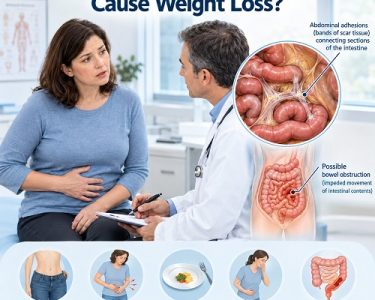
- Symptoms of intestinal obstruction in severe cases
Importantly, infertility may sometimes be the first reason a person discovers that pelvic adhesions are present.
You cannot reliably determine whether you have adhesions based only on symptoms. A person may have extensive adhesions with few symptoms, while another person may experience significant pain from a relatively limited problem.
Can Abdominal Adhesions Cause Infertility?
They can contribute to infertility in some cases, particularly when adhesions affect the fallopian tubes, ovaries or surrounding pelvic structures.
However, it would be inaccurate to say that abdominal adhesions always cause infertility.
Infertility can have many causes, including:
- Ovulation problems
- Age-related changes in fertility
- Fallopian tube blockage
- Endometriosis
- Uterine conditions
- Reduced ovarian reserve
- Sperm-related factors
- Hormonal conditions
- Unexplained infertility
Both partners may need assessment when pregnancy does not occur as expected.
The important point is that abdominal adhesions and fertility can be connected, but adhesions are only one potential factor in reproductive health.
How Are Adhesions Diagnosed?
Diagnosing adhesions can be challenging because they are often difficult to see with standard imaging.
A doctor may begin by reviewing your:
- Surgical history
- Previous infections
- Pelvic symptoms
- Menstrual history
- Pregnancy history
- Fertility history
- Medical conditions
Imaging tests such as ultrasound, CT or MRI can help identify other causes of abdominal or pelvic symptoms, although adhesions themselves may not always be visible.
Depending on your circumstances, a fertility specialist may recommend tests that assess whether the fallopian tubes are open.
Hysterosalpingography
A hysterosalpingogram, commonly called an HSG, uses imaging and contrast material to evaluate the uterus and fallopian tubes. It can help identify certain types of fallopian tube blockage.
Laparoscopy
Laparoscopy is a minimally invasive surgical procedure that allows a surgeon to directly inspect the abdominal and pelvic cavity.
Because adhesions can be difficult to detect with routine imaging, laparoscopy may sometimes identify them directly. In selected situations, treatment may also be performed during the same procedure.
What Treatments Are Available?
Abdominal Adhesions Treatment depends on whether the adhesions are causing symptoms or affecting fertility.
If adhesions are not causing problems, treatment may not be necessary.
When adhesions appear to contribute to fertility difficulties, a fertility specialist may discuss several approaches.
Adhesiolysis
Adhesiolysis is a procedure in which adhesions are surgically separated or removed.
This may help restore the normal relationship between pelvic organs when scar tissue has distorted their anatomy.
However, surgery does not guarantee pregnancy. Adhesions can sometimes reform after surgery, and the underlying cause of infertility may involve other factors.
Fertility treatment
Depending on the condition of the fallopian tubes and other fertility factors, assisted reproductive treatments may be considered.
For example, in vitro fertilisation (IVF) can sometimes bypass problems involving the fallopian tubes because fertilisation occurs outside the body before the embryo is transferred to the uterus.
Whether IVF, surgery or another fertility approach is appropriate depends on the individual situation.
Can Adhesions Come Back After Treatment?
Yes. Adhesions can recur after surgical treatment.
Any abdominal or pelvic surgery can cause tissue irritation and healing, which may lead to new scar tissue formation. Surgeons therefore consider techniques intended to minimise tissue trauma and reduce adhesion formation where appropriate.
This is one reason why surgery for adhesions is not automatically recommended for everyone experiencing fertility problems.
The potential benefits and risks should be considered carefully.
When Should You See a Doctor About Fertility?
Consider speaking with a healthcare professional if you have been trying to conceive without success, particularly if you have a history of abdominal or pelvic surgery.
A fertility evaluation may also be appropriate if you have:
- A history of pelvic inflammatory disease
- Known or suspected endometriosis
- Previous fallopian tube problems
- Previous pelvic surgery
- Recurrent pelvic pain
- Previous ectopic pregnancy
- Irregular ovulation or menstrual cycles
- A known reproductive health condition
Your doctor can determine whether adhesions are likely to be relevant and whether additional testing is appropriate.
What Can You Do If You Have Abdominal Adhesions and Want to Become Pregnant?
If you know that you have abdominal or pelvic adhesions and are planning a pregnancy, speak with a gynaecologist or fertility specialist.
The evaluation may focus on whether:
- The fallopian tubes are open.
- The ovaries are functioning normally.
- Ovulation is occurring.
- The uterus appears suitable for pregnancy.
- There are other causes of infertility.
- Male fertility factors may be contributing.
- Adhesions are significant enough to require treatment.
This approach is generally more useful than assuming that adhesions are the sole reason for difficulty conceiving.
Frequently Asked Questions
Can mild abdominal adhesions affect fertility?
Mild adhesions may have little or no effect on fertility. Their potential impact depends on their location and whether they interfere with the fallopian tubes, ovaries or other reproductive structures.
Are pelvic adhesions the same as abdominal adhesions?
Pelvic adhesions are a type of adhesion that occurs within the pelvic area. Abdominal adhesions can occur elsewhere in the abdomen as well. The terms may overlap when scar tissue affects both abdominal and pelvic structures.
Can adhesions block fallopian tubes?
Yes. Adhesions can sometimes surround, compress, tether or distort the fallopian tubes. This may interfere with their normal function or contribute to blockage.
Can you get pregnant naturally with abdominal adhesions?
Yes. Having abdominal adhesions does not automatically prevent natural pregnancy. The likelihood depends on the location and severity of the adhesions and other fertility factors.
Does removing adhesions improve fertility?
In selected cases, removing adhesions may restore pelvic anatomy and potentially improve fertility. However, surgery does not guarantee pregnancy, and adhesions may recur.
Does IVF work if you have pelvic adhesions?
IVF can sometimes help overcome fertility problems related to fallopian tube damage or blockage because fertilisation takes place outside the fallopian tubes. A fertility specialist can determine whether IVF is appropriate for your circumstances.
Final Thoughts
The connection between abdominal adhesions and fertility can be important, particularly when scar tissue affects the fallopian tubes, ovaries or other pelvic structures. Adhesions may change the normal anatomy of the pelvis and, in some cases, contribute to difficulty conceiving.
At the same time, not everyone with abdominal adhesions experiences infertility. Surgery, endometriosis, previous infection and other conditions can increase the likelihood of adhesion formation, but fertility depends on many different factors.
If you are struggling to conceive and have a history of abdominal or pelvic surgery, endometriosis, pelvic infection or other risk factors, a medical evaluation can help identify the underlying cause. Tests that assess ovulation, reproductive organs and fallopian tube function can help guide the next steps.
Understanding the specific cause of fertility problems is important because treatment should be based on your individual reproductive health rather than the presence of adhesions alone.
Medical Disclaimer
This article is intended for general educational purposes only and does not replace professional medical advice, diagnosis or treatment. If you are experiencing infertility, persistent pelvic or abdominal pain, or other concerning symptoms, consult a qualified healthcare professional or fertility specialist for an appropriate evaluation.