
 By
By If your doctor has recommended a Gastric Emptying Study, you may be wondering what the test involves, why it’s necessary, and how you should prepare. Understanding the process can help ease anxiety and ensure you get the most accurate results possible.
A Gastric Emptying Study is one of the diagnostic tests for gastroparesis that measures how quickly food leaves your stomach and enters the small intestine. It is most commonly used to evaluate conditions that affect stomach motility, such as gastroparesis. In this comprehensive guide, we’ll walk you through everything you need to know about a Gastric Emptying Study — from preparation to results and beyond.
What Is a Gastric Emptying Study?
A Gastric Emptying Study is a non-invasive imaging test that evaluates how efficiently your stomach empties its contents. It typically uses a small amount of radioactive material mixed with food to track digestion.
The procedure is usually performed in the nuclear medicine department of a hospital or imaging center. The radioactive tracer allows a special camera, called a gamma camera, to capture images of the stomach over time.
This test helps physicians determine whether your stomach is emptying normally, too slowly, or too quickly.
Why Is a Gastric Emptying Study Performed?
Doctors order a Gastric Emptying Study to investigate symptoms that may suggest a digestive motility disorder. These symptoms can include:
- Chronic nausea
- Vomiting undigested food
- Early satiety (feeling full quickly)
- Bloating
- Abdominal pain
- Unexplained weight loss
- Poor blood sugar control in people with diabetes
One of the most common conditions diagnosed with this test is gastroparesis, a disorder in which the stomach empties more slowly than normal.
It may also be used to evaluate:
- Complications from diabetes
- Post-surgical digestive issues
- Functional dyspepsia
- Rapid gastric emptying (dumping syndrome)
Conditions Diagnosed with a Gastric Emptying Study
Gastroparesis
Gastroparesis is a condition where the stomach muscles do not work properly, delaying the movement of food into the small intestine. It is often associated with diabetes, but can also occur after surgery or due to certain medications.
Dumping Syndrome
This condition involves food moving too quickly from the stomach into the small intestine. It often occurs after gastric surgery.
Functional Gastrointestinal Disorders
When symptoms are present but no structural abnormality is found, a Gastric Emptying Study can help identify motility problems that may not be visible on endoscopy or CT scans.
How to Prepare for a Gastric Emptying Study
Proper preparation is essential for accurate results during a Gastric Emptying Study.
Fasting
You will typically need to fast for 4 to 8 hours before the test. Your healthcare provider will give you specific instructions.
Medication Adjustments
Certain medications can affect stomach emptying. Your doctor may advise you to temporarily stop:
- Prokinetic medications
- Anticholinergics
- Narcotic pain medications
- Some antidepressants
Always follow your doctor’s guidance and do not stop medications without medical advice.
Blood Sugar Control
If you have diabetes, your blood glucose level should be well controlled on the day of the test. High blood sugar can delay gastric emptying and affect results.
What Happens During a Gastric Emptying Study?
Understanding what happens step by step can make the experience less stressful.
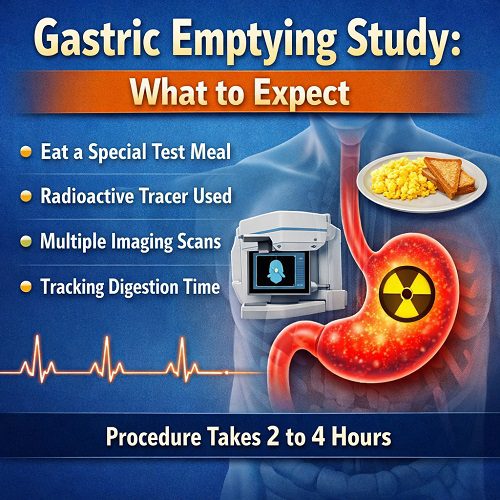
Step 1: Eating the Test Meal
You will eat a small meal that contains a safe, minimal amount of radioactive material. The most common meal includes:
- Scrambled eggs or egg substitute
- Toast
- Water
The radioactive tracer is tasteless and safe. The radiation exposure is minimal and comparable to other diagnostic imaging tests.
Step 2: Imaging
After eating, you will lie or stand in front of a gamma camera. The camera takes images of your stomach at regular intervals, often:
- Immediately after eating
- 1 hour
- 2 hours
- 3 hours
- 4 hours
The entire Gastric Emptying Study may take up to four hours.
You are usually allowed to sit in the waiting area between scans.
Step 3: Monitoring
The medical team monitors how much of the radioactive meal remains in your stomach at each time point. The percentage remaining helps determine whether emptying is normal.
Is a Gastric Emptying Study Painful?
A Gastric Emptying Study is generally painless and non-invasive.
You may feel mild discomfort if you are already experiencing nausea or digestive symptoms, but the procedure itself does not cause pain.
The most challenging part for many patients is the time commitment, as the test can last several hours.
Risks and Safety of a Gastric Emptying Study
The test is considered very safe.
Radiation Exposure
The amount of radiation used in a Gastric Emptying Study is very small and considered safe for most adults. However:
- Pregnant women should inform their doctor
- Breastfeeding mothers may need special instructions
Allergic Reactions
Allergic reactions are extremely rare because the radioactive tracer is mixed with common food items.
After the Gastric Emptying Study
Once the test is complete, you can usually resume normal activities immediately.
There are typically no restrictions after the procedure. The radioactive material naturally passes through your body.
You can:
- Eat normally
- Return to work
- Drive yourself home
Your doctor will receive the results and discuss them with you at a follow-up appointment.
Understanding Gastric Emptying Study Results
The results of a Gastric Emptying Study are usually expressed as a percentage of food remaining in the stomach at specific time intervals.
Normal Results
Most of the meal should empty from the stomach within four hours.
Delayed Gastric Emptying
If a significant amount of food remains after four hours, this may indicate gastroparesis.
Rapid Gastric Emptying
If food leaves the stomach too quickly, it may suggest dumping syndrome.
Your physician will interpret the results in the context of your symptoms and medical history.
How Accurate Is a Gastric Emptying Study?
A Gastric Emptying Study is considered the gold standard for diagnosing gastric motility disorders.
However, results can be influenced by:
- Blood sugar levels
- Medications
- Smoking
- Hormonal fluctuations
Following preparation instructions carefully ensures the most reliable outcome.
Alternatives to a Gastric Emptying Study
While the Gastric Emptying Study is widely used, other tests may be considered in certain cases:
- Breath testing
- Wireless motility capsule
- Upper endoscopy (to rule out obstruction)
- Ultrasound
Your doctor will determine which test is most appropriate.
Frequently Asked Questions
How long does a Gastric Emptying Study take?
Typically, it lasts between two to four hours, depending on the protocol used.
Can I eat after a Gastric Emptying Study?
Yes, you can return to normal eating immediately after the test unless instructed otherwise.
Is the radioactive material dangerous?
No. The amount used in a Gastric Emptying Study is very small and considered safe.
Will insurance cover it?
Most insurance plans cover the test when medically necessary. Always verify with your provider.
Tips to Make Your Gastric Emptying Study Easier
- Bring a book or tablet to pass the time
- Wear comfortable clothing
- Follow fasting instructions carefully
- Inform staff about any medications
- Arrive early to complete paperwork
Being well-prepared can make the experience smoother and less stressful.
When to Call Your Doctor
After your Gastric Emptying Study, contact your healthcare provider if you experience:
- Severe abdominal pain
- Persistent vomiting
- Signs of allergic reaction (rare)
Although complications are uncommon, it’s always best to report unusual symptoms.
Final Thoughts on Gastric Emptying Study: What to Expect
A Gastric Emptying Study is a valuable and safe diagnostic tool that helps doctors understand how well your stomach functions. If you are experiencing chronic digestive symptoms, this test can provide crucial insights and guide Effective Treatment for Gastroparesis.
While spending several hours undergoing imaging may feel inconvenient, the information gained from a Gastric Emptying Study can significantly improve your quality of life by leading to accurate diagnosis and targeted therapy.
If your physician recommends a Gastric Emptying Study, rest assured that it is a straightforward, low-risk procedure designed to help uncover the root cause of your symptoms.
By knowing what to expect, preparing properly, and understanding the results, you can approach your Gastric Emptying Study with confidence and peace of mind.