 By
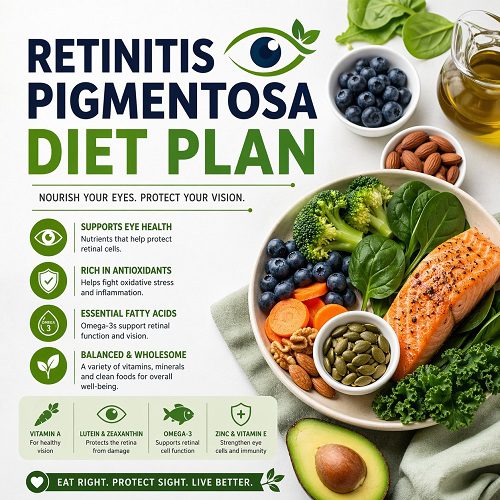
By Living with Retinitis Pigmentosa (RP) can be challenging, especially as it gradually affects vision over time. While there is currently no definitive cure, research shows that lifestyle choices—especially nutrition—can play a powerful role in slowing progression and supporting overall eye health. This is where a well-structured Retinitis Pigmentosa Diet Plan becomes essential. How diet influences retinal health, which nutrients are critical, foods to include or avoid, and a practical meal plan to help you live better with RP.
Understanding Retinitis Pigmentosa and Nutrition
Retinitis Pigmentosa is a group of inherited disorders that cause progressive degeneration of the retina, leading to night blindness, tunnel vision, and eventually loss of central vision in some cases. Since the retina is highly metabolically active, it requires a steady supply of nutrients to function optimally.
A targeted Retinitis Pigmentosa Diet Plan focuses on:
- Protecting photoreceptor cells
- Reducing oxidative stress
- Supporting blood circulation to the eyes
- Slowing retinal degeneration
Nutrition cannot reverse RP, but it can significantly improve quality of life and potentially delay vision loss.
The Role of Nutrition in Eye Health
The eyes, particularly the retina, are vulnerable to oxidative stress caused by free radicals. Antioxidants and essential nutrients help combat this damage. A diet rich in vitamins, minerals, and healthy fats can:
- Strengthen retinal cells
- Improve night vision
- Reduce inflammation
- Enhance overall eye function
This is why adopting a carefully designed Retinitis Pigmentosa Diet Plan is not just helpful—it’s crucial.
Key Nutrients for Retinitis Pigmentosa
1. Vitamin A
Vitamin A is one of the most important nutrients for retinal function. It plays a key role in the visual cycle and helps maintain photoreceptor cells.
Best sources:
- Carrots
- Sweet potatoes
- Spinach
- Kale
- Liver (in moderation)
Note: High-dose Vitamin A supplementation should only be taken under medical supervision, as excessive intake can be harmful.
2. Omega-3 Fatty Acids
Omega-3s, particularly DHA, are essential for maintaining the structure of retinal cells.
Best sources:
- Fatty fish (salmon, mackerel, sardines)
- Flaxseeds
- Chia seeds
- Walnuts
Omega-3s are a cornerstone of any effective Retinitis Pigmentosa Diet Plan.
3. Lutein and Zeaxanthin
These antioxidants protect the retina from light-induced damage and improve visual performance.
Best sources:
- Green leafy vegetables (kale, spinach)
- Corn
- Eggs
4. Vitamin C
Vitamin C helps reduce oxidative stress and supports blood vessels in the eyes.
Best sources:
- Oranges
- Lemons
- Strawberries
- Bell peppers
5. Vitamin E
Vitamin E protects eye cells from damage caused by free radicals.
Best sources:
- Almonds
- Sunflower seeds
- Avocados
6. Zinc
Zinc helps transport Vitamin A from the liver to the retina and supports immune function.
Best sources:
- Pumpkin seeds
- Chickpeas
- Meat
- Dairy products
7. Beta-Carotene
This plant-based compound converts into Vitamin A and supports night vision.
Best sources:
- Carrots
- Pumpkin
- Mangoes
Foods to Include in a Retinitis Pigmentosa Diet Plan
A balanced diet rich in whole, nutrient-dense foods is key. Here are the top food groups to focus on:
1. Leafy Greens
Spinach, kale, and collard greens are rich in lutein and zeaxanthin.
2. Fatty Fish
Include fish at least 2–3 times a week for omega-3 benefits.
3. Colorful Fruits and Vegetables
Brightly colored produce provides a wide range of antioxidants.
4. Nuts and Seeds
A great source of Vitamin E and healthy fats.
5. Whole Grains
Support overall health and maintain stable blood sugar levels.
6. Legumes
Provide zinc, protein, and fiber.
Foods to Avoid or Limit
Certain foods can increase inflammation and oxidative stress, worsening eye health.
- Processed foods
- Sugary snacks and drinks
- Trans fats
- Excessive alcohol
- High-sodium foods
Reducing these is a critical part of an effective Retinitis Pigmentosa Diet Plan.
A Sample 7-Day Retinitis Pigmentosa Diet Plan
Day 1
Breakfast: Oatmeal with walnuts and berries
Lunch: Grilled chicken salad with spinach and olive oil
Dinner: Baked salmon with steamed broccoli
Day 2
Breakfast: Smoothie with kale, banana, and chia seeds
Lunch: Lentil soup with whole-grain bread
Dinner: Grilled fish with roasted vegetables
Day 3
Breakfast: Eggs with sautéed spinach
Lunch: Quinoa salad with chickpeas
Dinner: Chicken curry with brown rice
Day 4
Breakfast: Yogurt with flaxseeds and fruit
Lunch: Vegetable stir-fry
Dinner: Baked sweet potato with grilled fish
Day 5
Breakfast: Whole-grain toast with avocado
Lunch: Bean salad with olive oil dressing
Dinner: Lean beef with steamed greens
Day 6
Breakfast: Smoothie with berries and almond milk
Lunch: Chicken wrap with vegetables
Dinner: Fish curry with brown rice
Day 7
Breakfast: Scrambled eggs with tomatoes
Lunch: Spinach and chickpea salad
Dinner: Grilled salmon with quinoa
Hydration and Eye Health
Water is often overlooked but essential for maintaining eye moisture and overall health. Dehydration can worsen eye strain and dryness.
Tip: Aim for 8–10 glasses of water daily.
Supplements: Should You Consider Them?
While food should always be your primary source of nutrients, supplements may be beneficial in some cases.
Common supplements for Retinitis Pigmentosa include:
- Vitamin A (under doctor supervision)
- Omega-3 fish oil
- Lutein and zeaxanthin
Always consult a healthcare professional before starting any supplement regimen.
Lifestyle Tips to Support Your Diet
A strong Retinitis Pigmentosa Diet Plan works best when combined with healthy lifestyle habits:
1. Regular Eye Checkups
Monitor disease progression and adjust treatment as needed.
2. Protect Your Eyes from UV Light
Wear sunglasses to reduce retinal damage.
3. Exercise Regularly
Improves blood circulation, including to the eyes.
4. Avoid Smoking
Smoking increases oxidative stress and accelerates vision loss.
The Science Behind Diet and RP
Research suggests that oxidative stress plays a major role in retinal degeneration. Nutrients like antioxidants and omega-3 fatty acids help neutralize free radicals, protecting retinal cells.
Studies have also shown that diets rich in fish and Vitamin A may slow the progression of RP in some individuals.
Common Myths About Retinitis Pigmentosa Diet
Myth 1: Diet Can Cure RP
There is no cure yet, but diet can slow progression and improve quality of life.
Myth 2: Supplements Alone Are Enough
Whole foods provide a complex mix of nutrients that supplements cannot fully replicate.
Myth 3: Only Vitamin A Matters
A balanced approach with multiple nutrients is essential.
Creating a Sustainable Diet Plan
Consistency is key. Instead of drastic changes, focus on gradual improvements:
- Add one healthy meal per day
- Replace processed snacks with fruits
- Include fish weekly
- Drink more water
A sustainable Retinitis Pigmentosa Diet Plan should be easy to follow long-term.
Final Thoughts
Managing Retinitis Pigmentosa requires a holistic approach, and diet plays a vital role in supporting eye health and overall well-being. While nutrition cannot cure RP, it empowers you to take control of your health and potentially slow the progression of vision loss.
By focusing on antioxidant-rich foods, healthy fats, and essential vitamins, you can build a strong foundation for better living. Start small, stay consistent, and make your Retinitis Pigmentosa Diet Plan a lifelong commitment.