 By
By Digestive health plays a crucial role in overall well-being. While many gastrointestinal issues are manageable with proper care, some gastroparesis complications can become serious if left untreated. One such condition is Bezoars—a potentially dangerous buildup of undigested material in the digestive tract. Though relatively uncommon, bezoars can lead to severe complications, including obstruction, infection, and even life-threatening emergencies. What Bezoars are, their causes, symptoms, risk factors, diagnosis, treatment options, prevention strategies, and why early medical intervention is critical.
What Are Bezoars?
Bezoars are solid masses of indigestible material that accumulate in the gastrointestinal (GI) tract, most commonly in the stomach. These masses form when substances that cannot be digested clump together over time, creating a hardened formation that the body cannot easily pass.
The term “bezoar” originates from the Persian word padzahr, meaning antidote. Historically, bezoars were believed to have medicinal properties and were used as antidotes to poison. Today, however, bezoars are recognized as a medical concern that requires proper diagnosis and treatment.
Types of Bezoars
There are several different types of Bezoars, classified according to the material that forms them:
1. Phytobezoars
Phytobezoars are the most common type. They are composed of undigested plant fibers, such as cellulose, hemicellulose, lignin, and fruit skins. High-fiber foods like persimmons are especially known for contributing to phytobezoar formation.
2. Trichobezoars
Trichobezoars are made of hair and are typically found in individuals who compulsively pull out and swallow their hair—a condition known as trichophagia, often associated with trichotillomania. Over time, swallowed hair accumulates in the stomach because it cannot be digested.
In rare cases, a large trichobezoar can extend from the stomach into the small intestine, a condition known as “Rapunzel syndrome.”
3. Pharmacobezoars
Pharmacobezoars are composed of undigested medications. Certain extended-release or enteric-coated drugs may not dissolve properly, leading to accumulation and blockage.
4. Lactobezoars
Lactobezoars are most commonly seen in infants and consist of milk protein and mucus. Premature infants and those receiving highly concentrated formula are at higher risk.
How Do Bezoars Form?
The formation of Bezoars usually involves impaired gastric motility, meaning the stomach does not empty properly. When food or other materials remain in the stomach longer than normal, they may clump together and harden.
Several factors contribute to bezoar formation:
- Delayed stomach emptying (gastroparesis)
- Reduced stomach acid
- Prior gastric surgery
- Poor chewing habits
- High intake of fibrous foods
- Behavioral conditions (hair ingestion)
When these factors combine, they create the ideal environment for indigestible material to accumulate and form a mass.
Risk Factors for Bezoars
Certain individuals are more prone to developing Bezoars, including:
1. People with Gastroparesis
Gastroparesis slows down stomach emptying, increasing the risk of food retention and bezoar formation.
2. Post-Gastric Surgery Patients
Patients who have undergone procedures like gastric bypass or partial gastrectomy may experience altered stomach motility, increasing susceptibility.
3. Individuals with Diabetes
Long-standing diabetes can damage the vagus nerve, which controls stomach muscles, leading to delayed gastric emptying.
4. Psychiatric Disorders
Conditions such as trichotillomania (hair-pulling disorder) and pica (eating non-food items) significantly increase the risk of trichobezoars.
5. Poor Dentition
Difficulty chewing food properly increases the risk of large, undigested food particles accumulating in the stomach.
Symptoms of Bezoars
The symptoms of Bezoars can vary depending on size and location. Small bezoars may not cause noticeable symptoms, but larger ones can lead to serious problems.
Common symptoms include:
- Nausea
- Vomiting
- Early satiety (feeling full quickly)
- Abdominal pain
- Bloating
- Loss of appetite
- Weight loss
- Gastrointestinal bleeding (in severe cases)
If a bezoar causes a complete blockage, symptoms may include:
- Severe abdominal pain
- Persistent vomiting
- Inability to pass stool or gas
- Signs of dehydration
These symptoms require immediate medical attention.
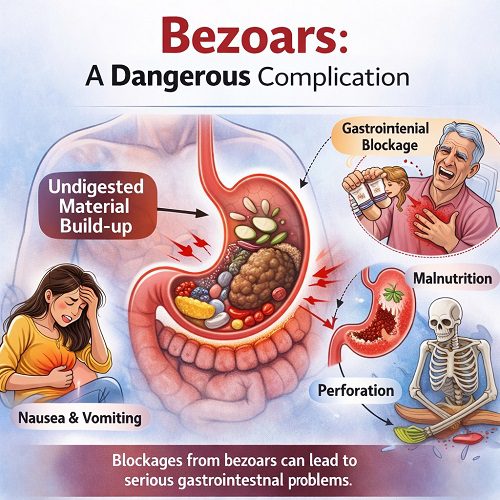
Complications of Bezoars
If left untreated, Bezoars can lead to significant complications:
1. Gastric Ulcers
The mass can irritate the stomach lining, causing ulcers and bleeding.
2. Intestinal Obstruction
A bezoar that moves into the intestines can cause a blockage, leading to a surgical emergency.
3. Perforation
In rare cases, prolonged pressure from a bezoar can cause a hole in the stomach or intestine, leading to life-threatening infection.
4. Malnutrition
Chronic nausea and vomiting can interfere with nutrient absorption and intake.
5. Infection
Stagnant material in the stomach may become a breeding ground for bacteria.
Because of these risks, early detection and treatment of Bezoars is critical.
Diagnosis of Bezoars
Doctors use several methods to diagnose Bezoars:
1. Endoscopy
An upper endoscopy is the most effective diagnostic tool. A flexible tube with a camera is inserted through the mouth into the stomach, allowing direct visualization.
2. Imaging Tests
- Abdominal X-rays
- CT scans
- Ultrasound
CT scans are particularly useful in identifying intestinal obstruction caused by bezoars.
3. Medical History
A detailed patient history—including dietary habits, psychiatric conditions, or prior surgeries—can help identify risk factors.
Treatment Options for Bezoars
Treatment depends on the type, size, and severity of the Bezoars.
1. Chemical Dissolution
For phytobezoars, certain solutions may help dissolve the mass. In some cases, carbonated beverages have been used to help break down plant fibers.
2. Endoscopic Removal
Doctors may use specialized instruments during endoscopy to break apart and remove the bezoar.
3. Enzymatic Therapy
Enzymes such as cellulase or papain may help dissolve plant-based bezoars.
4. Surgery
Large or complicated bezoars may require surgical removal, especially if they cause obstruction or perforation.
5. Psychiatric Treatment
For trichobezoars, behavioral therapy is essential to prevent recurrence.
Prevention of Bezoars
Preventing Bezoars involves addressing underlying risk factors:
- Chew food thoroughly
- Avoid excessive intake of high-fiber foods if at risk
- Manage diabetes effectively
- Treat gastroparesis appropriately
- Seek behavioral therapy for hair-pulling disorders
- Stay hydrated
- Follow post-surgical dietary guidelines carefully
Patients with a history of bezoars may require long-term dietary adjustments and regular follow-ups.
Bezoars and Gastroparesis: A Dangerous Link
Gastroparesis significantly increases the risk of developing Bezoars. Delayed stomach emptying allows food to stagnate, leading to clumping and hardening. For patients already experiencing nausea and bloating from gastroparesis, the presence of a bezoar can worsen symptoms dramatically.
Regular monitoring and proactive dietary management are essential for these individuals.
When to Seek Medical Attention
Seek immediate medical care if you experience:
- Severe abdominal pain
- Persistent vomiting
- Blood in vomit or stool
- Sudden weight loss
- Signs of obstruction
Early treatment of Bezoars greatly reduces the risk of serious complications.
Long-Term Outlook
With proper treatment most bezoars can be successfully removed without long-term consequences. However, recurrence is possible if underlying risk factors are not addressed.
Patients who receive appropriate dietary counseling, medical management, and behavioral support typically have excellent outcomes.
Final Thoughts
Although uncommon, Bezoars represent a potentially dangerous complication of digestive disorders and behavioral conditions. What may start as mild digestive discomfort can escalate into serious health problems if ignored.
Understanding the causes, recognizing symptoms early, and seeking timely medical intervention can prevent complications such as obstruction, ulceration, and infection. If you or someone you know has risk factors like gastroparesis, diabetes, prior gastric surgery, or compulsive hair ingestion, awareness and prevention are key.
Digestive health should never be overlooked. When it comes to Bezoars, early detection can make all the difference between a manageable condition and a medical emergency.