
 By
By Premature ejaculation (PE) is one of the most common and distressing male sexual health concerns, affecting millions worldwide. While the condition is often associated with psychological triggers such as anxiety, guilt, or performance pressure, there is growing curiosity about whether hormonal issues—particularly low testosterone—might play a role. Many men specifically ask, “Can low testosterone cause premature ejaculation?” Understanding this question requires a deep look into how testosterone functions, how premature ejaculation develops, and how the two might overlap.
At the same time, men seeking support often explore lifestyle remedies, medical therapies, traditional healing systems, and premature ejaculation food supplements as part of their improvement journey. But before looking into natural testosterone-boosting strategies or hormonal therapies, it’s essential to fully understand the condition itself—its causes, symptoms, and health implications—so that you can make informed decisions.
Understanding Premature Ejaculation
Premature ejaculation is a sexual dysfunction characterized by ejaculation that occurs sooner than a man or his partner desires. It may happen before penetration, immediately after penetration, or within less than a minute during intercourse. PE is divided into two main types:
Primary (Lifelong) PE:
Present since the first sexual experiences, often linked to genetic or neurobiological factors.
Secondary (Acquired) PE:
Develops later in life, often triggered by hormonal changes, stress, medical conditions, or emotional struggles. Premature ejaculation is not only a mechanical issue; it is a complex condition involving biological, psychological, neurological, and relational factors.
Symptoms of Premature Ejaculation
Men experiencing premature ejaculation typically face one or more of the following symptoms:
- Ejaculation with minimal sexual stimulation
- Persistent inability to delay ejaculation
- Reduced sexual pleasure or shortened sexual performance
- Anxiety related to sexual activity
- Relationship stress or emotional distress
- Feeling a lack of control over ejaculation
These symptoms can vary in intensity and frequency but usually cause some level of dissatisfaction or frustration. PE can also occur alongside other sexual health issues, including low libido, erectile dysfunction, or hormonal imbalances.
Causes of Premature Ejaculation
Although people often assume PE is psychological, research shows that both physical and mental factors contribute to it. The most common causes include:
Psychological Triggers
Many men experience PE due to:
- Performance anxiety
- Stress, depression, or emotional tension
- Guilt or shame surrounding sexual activity
- Relationship conflicts
- Early sexual conditioning
Emotional factors influence brain chemistry, making it harder to control ejaculation timing.
Neurological Sensitivity
Some men naturally have heightened penile nerve sensitivity, causing them to reach orgasm quickly.
Neurotransmitter Imbalance
Serotonin plays a major role in ejaculation timing. Low serotonin activity in specific brain pathways is known to trigger premature ejaculation.
Genetic Predisposition
Family patterns suggest that lifelong PE may have a hereditary component.
Medical Factors
Certain medical conditions can contribute to premature ejaculation, including:
- Thyroid disorders
- Prostatitis or inflammation
- Erectile dysfunction (ED)
- Diabetes
- Hormonal imbalances, including low testosterone
This brings us to the central question: can low testosterone cause premature ejaculation?
Can Low Testosterone Cause Premature Ejaculation?
The relationship between testosterone and premature ejaculation is complex. The focus keyword can low testosterone cause premature ejaculation reflects a growing interest among men who experience both PE and symptoms of low T, such as fatigue, low libido, and reduced sexual satisfaction.
Testosterone is the primary male sex hormone responsible for regulating libido, mood, sexual performance, and energy levels. While testosterone has a well-established role in desire and erection quality, its link to ejaculation control is less direct—but increasingly recognized.
How Low Testosterone Influences Sexual Function
When testosterone levels decline, several sexual functions may be affected:
- Decreased sexual desire
- Slower arousal
- Weaker erections
- Reduced duration of sexual activity
- Increased sexual anxiety
- Lower energy and confidence
All of these factors can indirectly contribute to premature ejaculation.
Hormonal Imbalance and Ejaculation Timing
Low testosterone may trigger hormonal imbalances involving neurotransmitters like dopamine and serotonin—both essential for healthy ejaculation control. For example:
- Reduced dopamine can lower motivation and arousal control.
- Disturbed serotonin balance can shorten ejaculatory latency.
Although not the primary cause of premature ejaculation, low testosterone can worsen existing PE, increase psychological stress, or trigger sexual performance issues that make ejaculation occur more quickly.
This is why many men ask: does low testosterone cause premature ejaculation? The answer is that while low testosterone is not usually the sole cause, it can contribute significantly to the problem and aggravate other underlying factors.
Symptoms of Low Testosterone That May Affect Ejaculation
Low testosterone (hypogonadism) has several symptoms that overlap with the sexual issues commonly seen in men with PE:
- Reduced sexual interest
- Fatigue and low energy
- Poor erection firmness
- Mood swings or irritability
- Loss of muscle mass
- Poor concentration
- Lowered confidence during sex
These issues can lead to rushed intercourse, anxiety, or lack of control—all of which increase the likelihood of premature ejaculation.
How Hormonal Health Affects Ejaculation Control
Hormones regulate nearly every aspect of sexual function. When testosterone levels decrease, they interact with other hormones in a way that can negatively influence ejaculatory control:
- Low T → Low dopamine → faster orgasm
- Low T → Increased cortisol (stress hormone) → tension and reduced control
- Low T → Worsened erectile function → rushing intercourse to maintain erection
Men may unconsciously speed up sexual activity due to fear of losing their erection, a behavior noted in many PE cases.
Other Contributing Factors Beyond Testosterone
While testosterone plays a role, it is just one piece of the bigger picture. Men with PE often have a combination of contributing factors:
- Overstimulation during intercourse
- Anxiety from past experiences
- Inconsistent sexual routines
- Relationship stress
- Lack of communication
- Sensitive nerve endings
Some men also develop PE from excessive early sexual experiences or practices. In some cases, experts explain that behavioral adjustments and certain sexual techniques can also help manage or prevent premature ejaculation—highlighting how habits and learned responses play a major role in the condition.
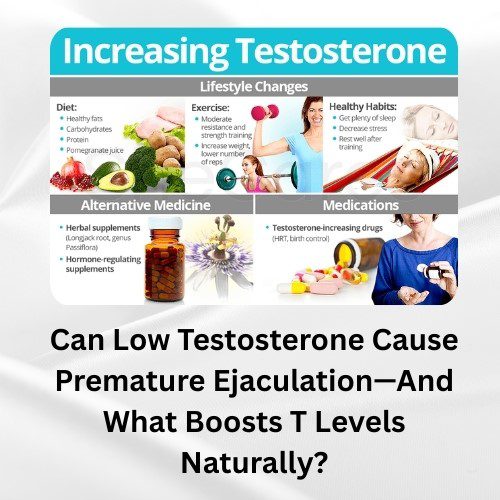
Natural Ways to Boost Testosterone Levels
Improving testosterone levels naturally can support sexual performance, confidence, and overall reproductive health. While medical treatments exist, many men prefer lifestyle-based strategies first. These natural approaches not only boost testosterone but also support better sexual stamina and ejaculation control.
Exercise and Strength Training
Weight-lifting and high-intensity interval training (HIIT) are two of the most effective testosterone boosters. They stimulate hormonal release, build muscle mass, and improve circulation in reproductive organs.
Sleep Optimization
Testosterone production peaks during deep sleep cycles. Getting 7–9 hours per night is essential for healthy hormone balance.
Balanced Nutrition
A testosterone-supportive diet includes:
- Lean proteins
- Healthy fats
- Zinc-rich foods
- Vitamin D sources
- Magnesium-rich vegetables
Some men also explore exploring the benefits of ayurvedic medicine for premature ejaculation, which often includes herbal formulas known to support reproductive strength and balance testosterone.
Stress Reduction
High stress increases cortisol, which suppresses testosterone production. Meditation, breathing exercises, yoga, and mindfulness can significantly help.
Limiting Alcohol and Avoiding Smoking
Alcohol decreases testosterone production, while smoking constricts blood vessels essential for erection quality and stamina.
Herbal Supplements
Herbs shown to support testosterone levels include:
- Ashwagandha
- Fenugreek
- Tongkat Ali
- Tribulus terrestris
- Shilajit
Some natural products used for testosterone support also overlap with natural supplements for delayed ejaculation, giving men additional benefits for stamina and endurance.
Ayurvedic and Traditional Approaches
Ayurveda and traditional herbal systems offer holistic strategies that focus on balancing the mind, body, and reproductive system. This may include:
- Herbal tonics
- Adaptogenic herbs
- Dietary guidance
- Sexual lifestyle routines
- Strengthening reproductive tissues
This explains why many men explore exploring the benefits of Natural Supplement for Premature Ejaculation, especially when seeking natural solutions that support both libido and stamina.
How Treating Low Testosterone Can Improve Premature Ejaculation
For men whose PE is linked partly or fully to low testosterone, restoring healthy hormone levels can improve:
- Libido and arousal
- Ejaculatory control
- Confidence
- Sexual satisfaction
- Erection firmness
Men often find that they become calmer during sex, feel more present, and gain better control over their timing after testosterone levels stabilize.
Lifestyle and Behavioral Approaches for Better Ejaculation Control
In addition to hormone-focused strategies, behavioral methods can help improve control:
- The start-stop technique
- The squeeze technique
- Pelvic floor (Kegel) exercises
- Slower, mindful sexual activity
- Improved communication with partners
Some men also incorporate premature ejaculation food supplements to support nerve health, blood flow, and energy levels.
The Role of Sexual Habits in Ejaculation Control
Sexual habits formed early in life can significantly influence PE. Fast, hidden masturbation, climax control condoms among ways to avoid premature ejaculation, says malaysian expert—suggesting that early behaviors can carry into adulthood and influence sexual timing.
Healthy sexual habits promote relaxation, patience, and awareness of sensations, all of which help prevent rapid ejaculation.
Should You Get Your Testosterone Checked?
If you notice symptoms such as:
- Low libido
- Fatigue
- Weak erections
- Mood swings
- Decreased muscle mass
- Difficulty concentrating
alongside premature ejaculation, it may be beneficial to assess hormone levels. A simple blood test evaluates total and free testosterone levels and helps identify whether hormonal imbalance contributes to your sexual symptoms.
Conclusion
Premature ejaculation is a complex condition with multiple causes, including psychological triggers, neurological sensitivity, and hormonal factors. While testosterone is not the only cause, understanding can low testosterone cause premature ejaculation is essential for men who face both symptoms. Research shows that low T can indeed influence libido, arousal, confidence, and nerve response—factors that play critical roles in ejaculation control. Because of this, many men explore natural strategies, lifestyle changes, medical therapies, and supportive options to improve their condition.
Natural testosterone-boosting approaches—such as exercise, sleep, herbal therapies, and Ayurvedic support—can help restore balance and enhance sexual wellbeing. At the same time, behavioral exercises and healthier sexual habits offer additional support for ejaculation control. Addressing hormonal health alongside psychological and lifestyle factors provides the best chance of overcoming premature ejaculation and rebuilding confidence, satisfaction, and sexual vitality.