 By
By If you notice a rough, dry or scaly patch on your skin that does not seem to disappear, it may be worth having it checked by a healthcare professional. One possible cause is actinic keratosis (AK), a common skin condition associated with long-term exposure to ultraviolet (UV) radiation.
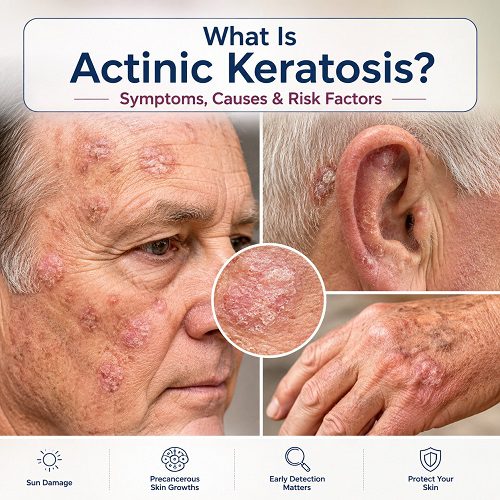
So, what is actinic keratosis? It is a rough, scaly area of skin that develops after years of sun or UV exposure have damaged skin cells. Actinic keratoses most often appear on areas that receive frequent sun exposure, including the face, scalp, ears, neck, forearms and backs of the hands.
Actinic keratosis is usually not cancer. However, it is considered a precancerous skin growth because some lesions can develop into squamous cell carcinoma, a type of skin cancer. This is why recognising changes in the skin and seeking appropriate medical advice is important.
What is Actinic Keratosis?
Actinic keratosis is a common skin condition caused primarily by cumulative exposure to UV radiation from sunlight or artificial sources such as tanning beds.
The condition develops when UV radiation damages the DNA of skin cells. Over time, abnormal cells can begin to grow in the outer layer of the skin, producing a rough or scaly patch.
The actinic keratosis definition can therefore be summarised as a sun-induced area of abnormal skin-cell growth that typically develops on chronically exposed skin.
Actinic keratoses may be very small and difficult to see initially. They can feel rough when you run your fingers over them, sometimes resembling fine sandpaper. As they develop, they may become thicker, more noticeable or more firmly attached to the skin.
A person can have a single lesion or multiple lesions across different areas of sun-exposed skin.
Although actinic keratosis is not the same as skin cancer, it indicates that the skin has experienced significant UV-related damage. Some lesions may eventually progress to squamous cell carcinoma, particularly if they remain untreated or continue to receive UV exposure.
What Does Actinic Keratosis Look Like?
Actinic keratosis can look different from one person to another. The appearance may also change as the lesion develops.
Common features include:
- Rough or sandpaper-like texture
- Dry, scaly skin
- Flat or slightly raised patches
- Red, pink, brown, tan or skin-coloured areas
- Small crusted areas
- Persistent patches that do not heal normally
- Thicker, wart-like lesions in some cases
Some lesions are easier to feel than see. For example, a person may notice a rough patch on the back of their hand but have difficulty identifying a clear boundary around it.
Actinic keratoses can range from a few millimetres to larger areas. They may also occur in clusters, with several lesions appearing close together.
Symptoms of Actinic Keratosis
Many actinic keratoses do not cause significant symptoms. However, some people experience discomfort or changes in the affected skin.
1. Rough, Scaly Texture
One of the most characteristic signs is a rough or gritty texture. The affected area may feel different from the surrounding skin, even when it is difficult to see.
2. Dryness and Flaking
The lesion may appear dry and develop fine scales. These scales can sometimes shed and then return.
3. Red or Pink Patches
Actinic keratoses commonly appear as red or pink patches, particularly in people with lighter skin.
4. Brown or Skin-Coloured Lesions
Some lesions may be tan, brown or close to the person’s natural skin colour. This can make them harder to recognise.
5. Burning or Stinging
Some people experience burning, tenderness, itching or stinging around an actinic keratosis. However, many lesions remain completely painless.
6. Crusting or Thickening
An actinic keratosis may become thicker over time and develop a crusted surface. A rapidly thickening or particularly tender lesion should be assessed by a healthcare professional.
7. Bleeding or Persistent Soreness
Occasional bleeding or persistent tenderness should not automatically be assumed to be a harmless actinic keratosis. Such changes warrant professional assessment because they can occur with skin cancer.
Where Does Actinic Keratosis Usually Develop?
Actinic keratosis generally develops on areas of the body that receive substantial UV exposure.
Common locations include:
- Face
- Forehead
- Nose
- Ears
- Scalp, particularly in people with little or no hair
- Neck
- Forearms
- Backs of the hands
- Shoulders
- Lower legs in some people
The location can provide an important clue. A persistent rough patch on a chronically sun-exposed area is more suspicious for actinic keratosis than an identical-looking lesion in an area that is normally covered.
What Causes Actinic Keratosis?
The primary cause of actinic keratosis is long-term UV radiation exposure.
Sunlight contains ultraviolet radiation that can damage the DNA within skin cells. Your body repairs much of this damage, but repeated exposure can cause damage to accumulate.
Over many years, this sun damage can lead to abnormal changes in skin cells and the development of actinic keratoses.
Importantly, actinic keratosis is generally associated with cumulative exposure rather than one isolated episode of sunburn. Regular outdoor activities, occupational sun exposure and repeated periods of unprotected sunlight can all contribute.
Artificial UV sources, particularly tanning beds, can also contribute to cumulative UV exposure.
Understanding the Role of Sun Damage
Sun damage is one of the most important factors behind actinic keratosis.
UV radiation can cause both immediate and long-term effects on the skin. Sunburn is an obvious short-term effect, but UV exposure can also produce changes that accumulate silently over decades.
Repeated exposure can contribute to:
- DNA damage
- Premature skin ageing
- Uneven pigmentation
- Changes in skin texture
- Actinic keratoses
- Increased risk of certain skin cancers
This is why protecting the skin from UV radiation remains important even when you have not experienced frequent sunburn.
Risk Factors for Actinic Keratosis
Not everyone exposed to sunlight develops actinic keratosis. Several factors can influence an individual’s risk.
Age
The risk generally increases with age because the skin accumulates UV damage over time. Actinic keratosis is particularly common in older adults.
Fair Skin
People with fair skin, particularly those who burn easily and tan poorly, are more susceptible to UV-related skin damage.
However, people with darker skin can also develop actinic keratosis. A lower risk does not mean complete protection.
History of Sun Exposure
People who have spent many years outdoors may have a higher risk. This can include people who work outdoors, participate in outdoor sports or regularly spend recreational time in strong sunlight.
Previous Sunburns
Repeated or significant sunburn can contribute to cumulative UV-related skin damage.
Tanning Bed Use
Artificial UV radiation from tanning beds can contribute to DNA damage and increase the risk of actinic keratosis and skin cancer.
Weakened Immune System
People whose immune systems are suppressed, such as individuals taking certain immunosuppressive medicines, may have an increased risk of developing actinic keratoses and progressing to skin cancer.
Previous Skin Cancer
A personal history of skin cancer can indicate increased susceptibility to UV-related skin damage and future skin cancers.
Outdoor Occupations
Farmers, construction workers, gardeners, fishermen and others who spend substantial time outdoors may receive significant cumulative UV exposure.
Is Actinic Keratosis Skin Cancer?
Actinic keratosis itself is not usually skin cancer. However, it is considered a precancerous lesion because some actinic keratoses can progress to squamous cell carcinoma.
It is not possible to determine the behaviour of every lesion simply by looking at it. Some remain stable for years, some disappear and return, and others may gradually become thicker or more abnormal.
For this reason, persistent or changing lesions should be assessed rather than ignored.
Can Actinic Keratosis Turn Into Skin Cancer?
Yes, some actinic keratoses can progress to squamous cell carcinoma (SCC).
The overall risk for an individual lesion is generally low, but people with multiple actinic keratoses may have evidence of substantial cumulative UV damage and therefore an increased overall risk of developing skin cancer.
Changes that deserve prompt medical attention include:
- Rapid growth
- Increasing thickness
- Persistent pain or tenderness
- Recurrent bleeding
- Ulceration
- Significant crusting
- A lesion that becomes hard or develops a horn-like appearance
- A sore that does not heal
These signs do not necessarily mean cancer is present, but they should be evaluated by a doctor or dermatologist.
How Is Actinic Keratosis Diagnosed?
A healthcare professional will usually diagnose actinic keratosis by examining the skin.
During the examination, they may assess:
- The lesion’s colour
- Texture
- Size
- Thickness
- Location
- Surrounding skin
- Whether there are multiple lesions
A dermatoscope may be used to examine the lesion more closely.
If the diagnosis is uncertain, particularly if the lesion appears unusually thick, painful or suspicious, a skin biopsy may be recommended. During a biopsy, a small sample of tissue is removed and examined under a microscope.
A biopsy can help distinguish actinic keratosis from squamous cell carcinoma and other skin conditions.
Actinic Keratosis vs Other Skin Conditions
Not every rough or scaly patch is actinic keratosis.
Several other conditions can produce similar changes, including eczema, psoriasis, seborrhoeic keratosis, warts and certain types of skin cancer.
This is particularly important because different conditions require different treatments.
For example, skin keratosis is a broad term that may refer to several different types of keratotic skin growths. Seborrhoeic keratosis, for example, is generally benign and differs from actinic keratosis in its causes and clinical behaviour.
If you have a new or changing lesion, professional examination is the safest way to establish the diagnosis.
How Can Actinic Keratosis Be Prevented?
Because UV exposure is the major underlying cause, reducing sun exposure is an important part of prevention.
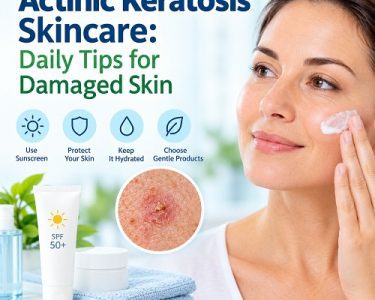
Use Sunscreen
Apply a broad-spectrum sunscreen with an appropriate sun protection factor (SPF) to exposed skin. Reapply as directed, especially during prolonged outdoor activities.
Wear Protective Clothing
Long sleeves, wide-brimmed hats and other protective clothing can reduce direct UV exposure.
Seek Shade
When possible, stay in shaded areas, particularly during periods when UV radiation is strongest.
Protect the Scalp
People with thinning hair or bald areas should remember to protect the scalp with a hat, sunscreen or other appropriate protection.
Avoid Tanning Beds
Avoiding artificial tanning devices reduces unnecessary UV exposure.
Examine Your Skin
Regularly checking your skin can help you identify new or changing lesions early. Pay attention to areas that receive regular sunlight as well as less obvious locations.
Actinic Keratosis Treatment Options
Actinic keratosis treatment options depend on the number, size, location and appearance of the lesions, as well as your overall skin health. Actinic keratosis (AK) is a sun-damage-related skin condition that can sometimes develop into squamous cell carcinoma, so suspicious or persistent lesions should be assessed by a healthcare professional.
For individual lesions, a dermatologist may recommend treatments such as cryotherapy, which freezes and destroys abnormal skin cells. Other options include prescription creams or gels, such as 5-fluorouracil, imiquimod, diclofenac or tirbanibulin, depending on the patient’s circumstances. Photodynamic therapy uses a light-sensitive medicine followed by controlled light exposure to treat affected skin. Curettage or other minor procedures may also be considered for thicker lesions.
People often search for Natural remedies for actinic keratosis, but these should not replace medically recommended treatment. There is limited evidence that home or natural remedies can reliably remove actinic keratoses or prevent their progression. Discuss any complementary approach with your healthcare professional before using it.
Sun protection is an essential part of managing actinic keratosis. Use broad-spectrum sunscreen, wear protective clothing and hats, seek shade and avoid tanning beds. Regular skin checks can also help identify new or changing lesions early.
When Should You See a Doctor?
You should consider professional assessment if you develop a rough, scaly patch that persists, particularly if it appears on an area with substantial sun exposure.
Seek medical attention sooner if a lesion:
- Changes rapidly
- Becomes increasingly painful
- Bleeds repeatedly
- Develops a thick crust
- Grows quickly
- Becomes unusually thick
- Fails to heal
It is better to have a suspicious lesion examined and find that it is harmless than to ignore a potentially significant skin change.
Frequently Asked Questions
Is actinic keratosis dangerous?
Actinic keratosis is usually not immediately dangerous, but it can indicate significant cumulative UV damage. Some lesions can progress to squamous cell carcinoma, so appropriate assessment and monitoring are important.
Can actinic keratosis go away on its own?
Some lesions may regress temporarily or disappear, but others persist or return. Disappearance does not necessarily mean the underlying sun damage has been eliminated.
Can young people develop actinic keratosis?
Yes, although it is more common with increasing age. Younger people with substantial UV exposure, tanning bed use or particular risk factors can also develop the condition.
Does actinic keratosis hurt?
Most lesions do not cause pain. Some can produce itching, burning, tenderness or stinging. Painful or rapidly changing lesions should be assessed.
Is actinic keratosis contagious?
No. Actinic keratosis is caused by cumulative UV-related skin damage and is not an infectious or contagious condition.
Final Thoughts
So, what is actinic keratosis? It is a common UV-related skin condition characterised by rough, scaly or crusted patches that usually develop on chronically sun-exposed areas.
Although actinic keratosis is not itself usually skin cancer, it is an important warning sign of accumulated sun damage and can sometimes develop into squamous cell carcinoma. Understanding the symptoms and risk factors makes it easier to recognise suspicious changes early.
Protecting your skin from UV radiation, checking your skin regularly and having persistent or changing lesions assessed by a healthcare professional are important steps towards long-term skin health.
If you notice a new rough patch, a lesion that changes, or a sore that does not heal, do not assume it is harmless. A dermatologist or other qualified healthcare professional can examine the area and determine whether further investigation or treatment is needed.